Color Analysis Quiz: What Season Am I?
Ten questions about your skin, hair and eyes, and you get your color season with a full palette — twelve shades with hex codes, the metals that suit you, and the hair and nail colours that go with them.
One white shirt makes you look rested. Another one makes you look like you need a nap. That is color analysis at work. Your skin has an undertone that never changes, and colors either agree with it or fight it.
This quiz asks ten questions. They cover your veins, your jewelry, your hair before you dyed it, and how your skin acts in the sun. Then it gives you one of the twelve color seasons, with your full palette and the hex codes.
It takes about two minutes. Do it in daylight, near a window, with no makeup on and your hair pushed back. That one step changes more results than any question here.
How the quiz decides your season
Every color has three qualities, and so does your face. Pro color analysts sort people by those same three. This quiz does it with questions you can answer at home.
Temperature is whether your coloring leans warm (golden, peachy, olive) or cool (pink, blue, ashy). This is the one that decides your season family: warm goes to Spring or Autumn, cool goes to Summer or Winter. The vein test, the jewelry test and the white-versus-cream test all check the same thing. That is why the quiz asks three ways instead of trusting one.
Value is how light or dark your coloring is overall. Someone with fair skin, light eyes and blonde hair sits at the light end. Someone with deep brown skin and black hair sits at the deep end. That is why two people with the same undertone often need different versions of one color.
Chroma is clarity: whether your features are bright and contrasted, or soft and blended. Squint at yourself in the mirror. If your face separates into clear shapes, you are bright. If it blurs into one gentle wash, you are muted. Bright people can wear bold color; muted people get taken over by it.
The twelve seasons, in one line each
Light Spring — warm, delicate, best in tints like peach and butter yellow.
True Spring — warm and clear, the coral and golden yellow season.
Bright Spring — warm with high clarity, carries bright coral and clear turquoise.
Light Summer — cool, light and soft: powder blue, dusty lavender, soft rose.
True Summer — cool and blended, at home in rose, soft navy and gray-blue.
Soft Summer — cool-neutral and muted, the dusty rose and sage season.
Soft Autumn — gently warm and muted: caramel, soft terracotta, warm sage.
True Autumn — properly warm and earthy, built on rust, olive and mustard.
Deep Autumn — warm and dark, wearing burgundy, forest green and espresso.
Deep Winter — cool and dark, the season that genuinely suits black.
True Winter — cool and crisp: true red, royal blue, pure white.
Bright Winter — cool-neutral and electric, made for hot pink and cobalt.
How to test your undertone at home
You do not need a professional drape kit to get a usable answer. You do need natural light. Warm bulbs make everyone look golden. LED strips make everyone look gray.
The vein test. Turn your wrist over near a window. Blue or purple veins point to a cool undertone; green or olive veins point to warm. If you genuinely cannot tell, you are probably neutral, which is more common than the internet suggests.
The jewelry test. Hold a silver chain against your bare jaw, then a gold one. Look at the skin, not the metal. One of them will make your face look clearer and the other will make the shadows under your eyes more obvious.
The white and cream test. This is the one most people skip and it is the most reliable of the three. Hold a pure white t-shirt under your chin, then a warm cream one. Cool coloring looks crisp in white and slightly yellow in cream. Warm coloring looks healthy in cream and slightly gray in white.
The sun test. How your skin behaves over a summer is a real clue. Skin that burns and stays pink usually sits cool; skin that tans deeply and quickly usually sits warm. Olive skin often burns and tans, which is one of the reasons olive is so often mislabelled.
What to actually do with your palette
Your colors matter most near your face. Think tops, sweaters, scarves, jackets, lipstick and hair color. A skirt in the wrong season is barely noticeable. A sweater in the wrong season shows in every photograph you are in.
The practical version looks like this. Pick two or three colors from your palette as your base for tops. Use your season’s neutral instead of black. Autumns wear camel and chocolate. Summers wear soft gray. Springs wear ivory. Take a screenshot of your swatches to the store. Colors look different under store lights than they do on a screen.
The same rule works for hair and nails. Warm seasons look best in golden and caramel balayage. Cool seasons look best in ash and mushroom tones.
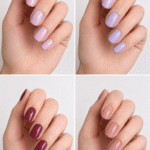
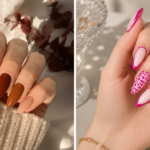
Nails work the same way. Pick the shade that matches your undertone, not the one trending this week. Our guide to nail colors for your skin tone walks through it shade by shade. Picking a shape too? The nail shape quiz takes two minutes.
Four mistakes that give people the wrong season
Testing with makeup on. Foundation is picked to correct your undertone, so testing over it tells you about the foundation, not you.
Testing under a bathroom light. Almost every bathroom bulb is warm or unnaturally white. Go to a window.
Judging by dyed hair. Color analysis uses the hair you were born with. If you have been blonde for a decade, answer for your roots or your childhood photos.
Assuming dark skin means Winter. Deep skin tones appear in every season family. Warm deep skin is Deep Autumn, cool deep skin is Deep Winter, and the difference shows up clearly in which metals suit you.
Frequently Asked Questions
Keep going: pair your palette with the right shape at the nail shape quiz, or read how we test and review everything on our editorial policy page.