
Some nail colors work the moment you put them on, hands look brighter, more put together, almost healthier somehow. Others sit there looking slightly wrong, and the reason usually has nothing to do with the color itself. It comes down to undertone.
This guide categorizes nail polish colors by skin tone, from fair to dark, reducing guesswork when choosing your shade. This guide also highlights colors that work well, those that blend well, and some that clash with each skin tone.
Nail Colors for Fair Skin Tones
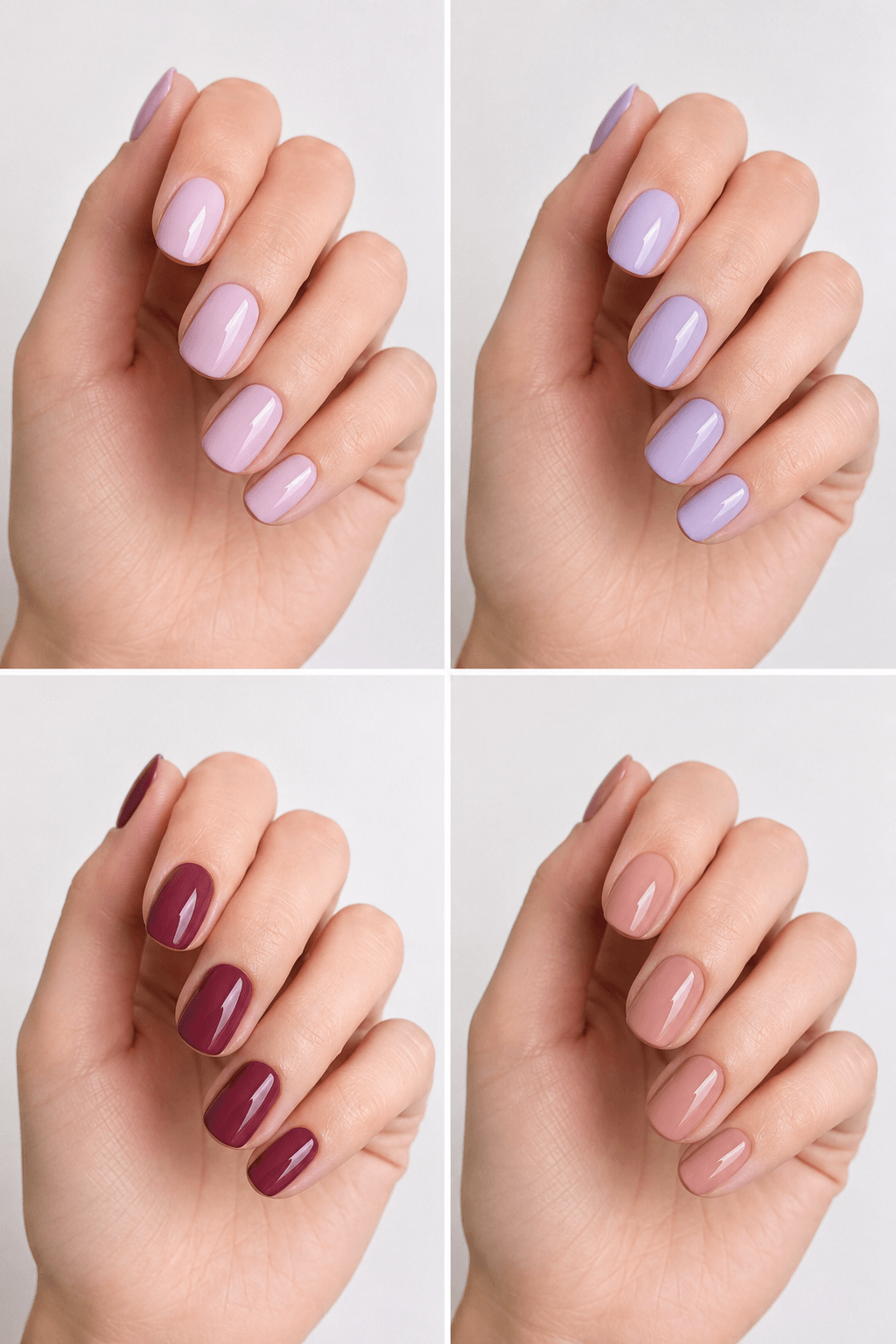
If one has fair skin, the undertone is generally cool or neutral, so colors that are too orange or too yellow will make their hand fade rather than warm up the color. Soft pinks, icy lavenders, and cool berries all work well in such a case.
A few shades worth trying on fair skin:
- Ballet pink with a hint of blue underneath
- Icy lilac or a soft lavender
- Berry wine, kept on the cooler side
- Sheer rose nude, nothing too yellow
Beige-based nudes can work too, but only when they lean pink. A beige that skews warm tends to look chalky rather than soft against fair skin. Orange-based reds and mustard tones give the most trouble here, they can make the hand look almost sunburned next to the actual skin tone.
Nail Colors for Light-Medium Skin Tones
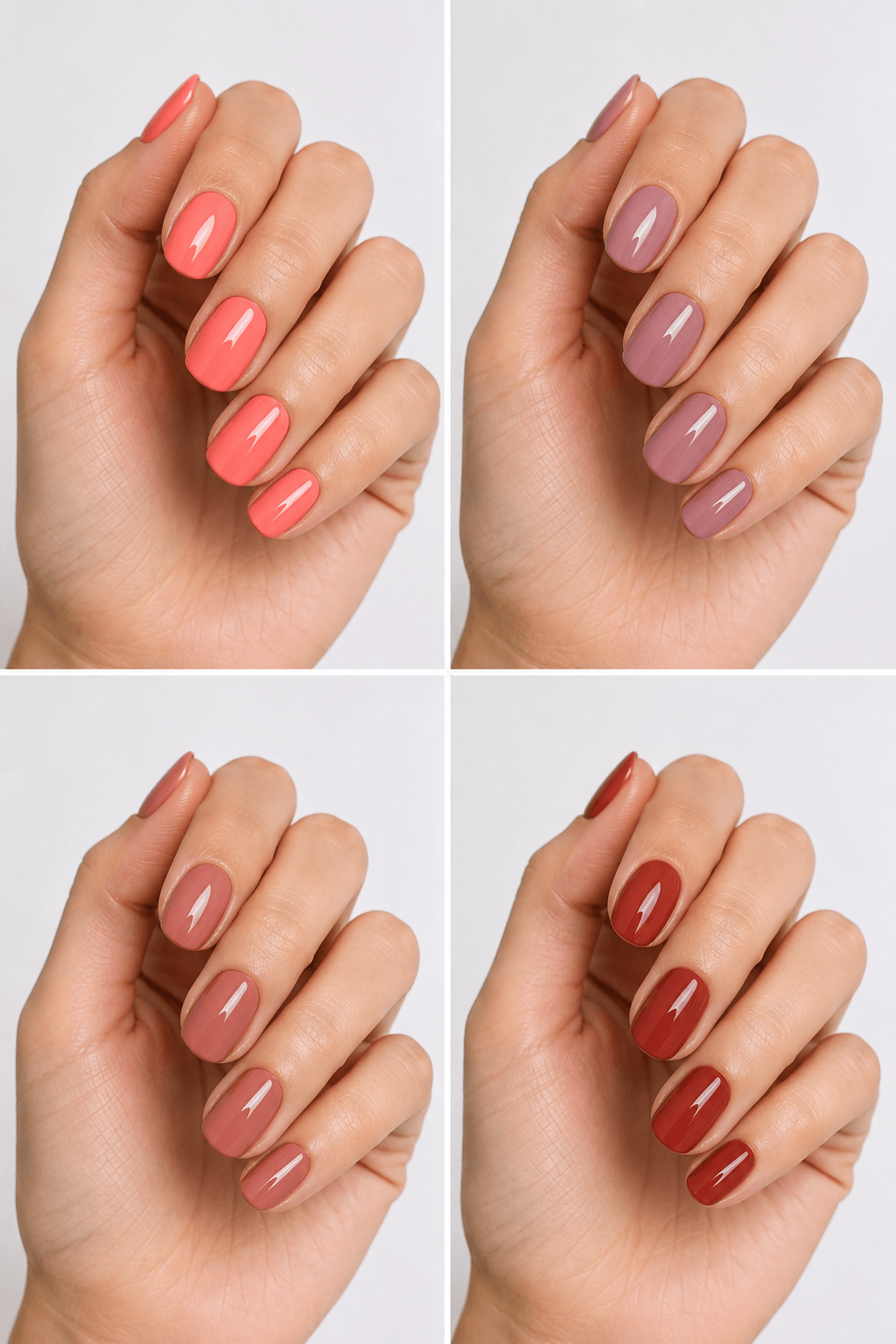
These colors will probably suit both cool and warm undertones well rather than light or dark shades. The shades of coral, rose, and mauve are less likely to clash with your skin color.
Shades that tend to work well:
- Warm coral, somewhere between pink and orange
- Soft mauve, a safe everyday option
- Terracotta rose
- Muted brick red for a bolder look
Mauve, in particular, works as a safe middle ground; it reads warm enough to complement most undertones in this range without needing an exact undertone match. The one category that tends to underperform here is very icy, blue-based pastels, they can look slightly flat rather than fresh on this skin tone.
Nail Colors for Olive Skin Tones
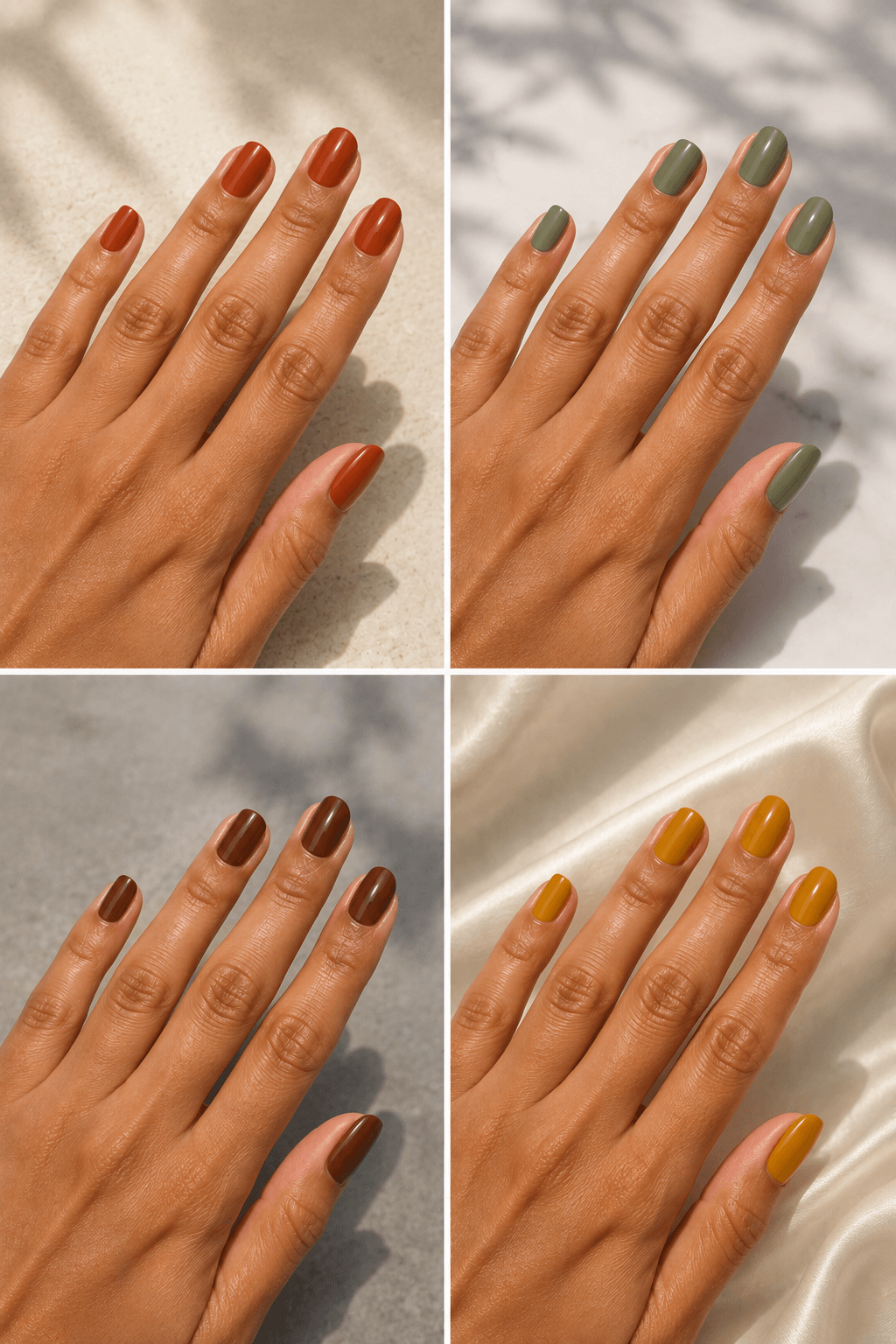
The olive-toned skin has a green or golden base, which changes how colors appear compared to other skin types. The terracotta colors, warm browns, and even olive green go well with olive-toned skin because they share the same undertone.
Worth trying:
- Terracotta or burnt sienna
- Olive or sage green
- Warm chocolate brown
- Deep mustard for a statement look
Very pink or very icy shades can sometimes look slightly off against olive skin, they tend to highlight the contrast rather than complement it. Bubblegum pink, in particular, tends to be the hardest color to pull off here; it can read as almost artificial next to the skin’s natural green undertone.
Nail Colors for Tan Skin Tones
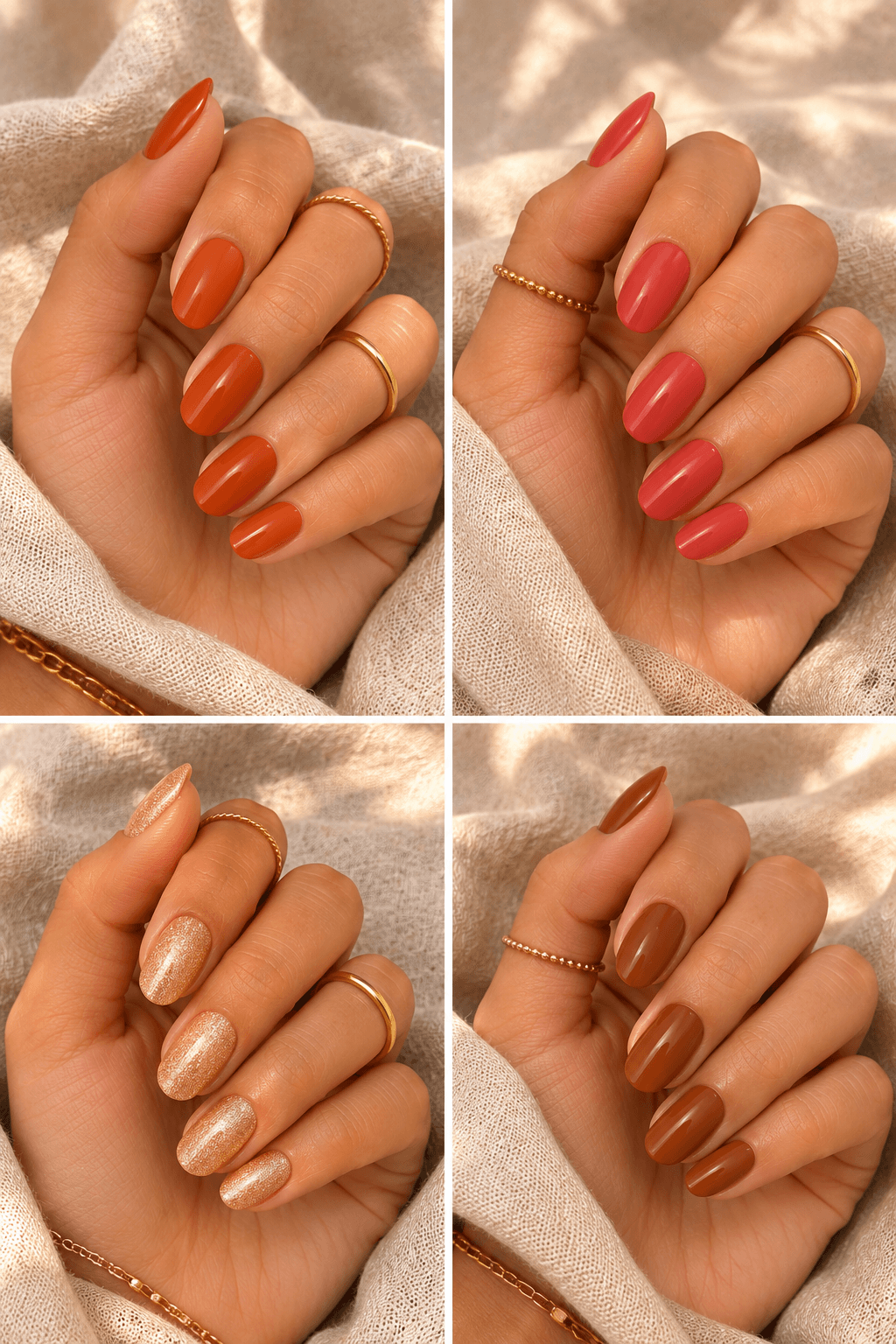
The warm tones already naturally exist within tanned skin, which is the reason why tones that have a warmth to them naturally fit and do not seem to sit on top of the skin. Tones like burnt orange and deep coral naturally complement the warm tones and gold highlights work well.
A short list to try:
- Burnt orange or pumpkin
- Deep coral, leaning more red than pink
- Gold shimmer or gold chrome
- Warm caramel brown
Metallics also tend to catch the light differently against tan skin; gold tones, in particular, look warmer and richer than they would against paler skin. Pale, icy shades are the main category to approach carefully here, they can look washed out rather than delicate against deeper warmth.
Nail Colors for Deep Skin Tones
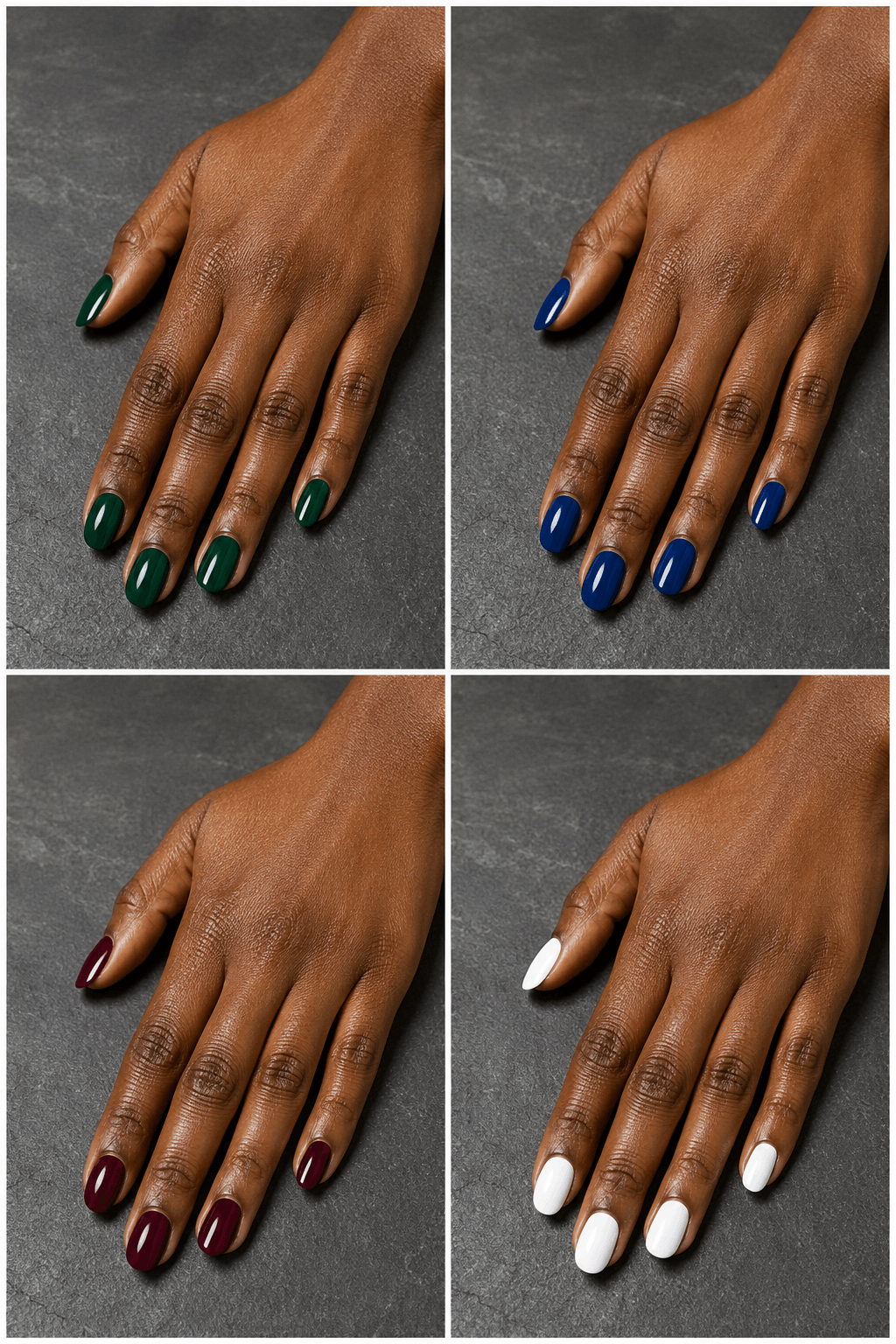
Deep skin tones are good at carrying bold colors that are vibrant. Pastels may appear pale when compared to other colors. Deep jewel colors such as emerald green, deep sapphire blue, and deep plum are also suitable for dark skin.
Colors that stand out clearly:
- Emerald or forest green
- Sapphire blue
- Deep plum or wine
- Bright white for strong contrast
Bright white and metallics also stand out clearly against deep skin, creating strong contrast that reads as polished rather than harsh. The shades that tend to disappear here are very pale, muted pastels, especially pale beige and light dusty pink, they can look faded rather than soft.
How to Test a Color Before Committing
A bottle of polish rarely looks the same in your hand as it does in the store. A few things help narrow it down before buying.
Testing in daylight matters more than testing under store lighting. Fluorescent lights shift colors in a cooler direction than they actually are, so a shade that looks perfect under a store’s lights can read completely differently once you’re outside.
Swatching directly on the nail, even just one finger, gives a more accurate read than looking at the bottle color alone. Nail polish tends to look darker in the bottle than it does once it’s thin on the nail.
Where there is any doubt about a color being right for you, try it out on your toe first before going all out with the whole nail set.
Frequently Asked Questions
Final Thoughts
Nail color isn’t really about rules, it’s about undertone matching, and once you know yours, picking a shade gets a lot easier. Use this as a starting point, not a strict limit, plenty of people wear colors outside their ideal range and still look great.
Save the section that matches your skin tone, and keep the shade list handy next time you’re standing in front of a polish wall unsure where to start.






1 thought on “Nail Colors for Every Skin Tone”