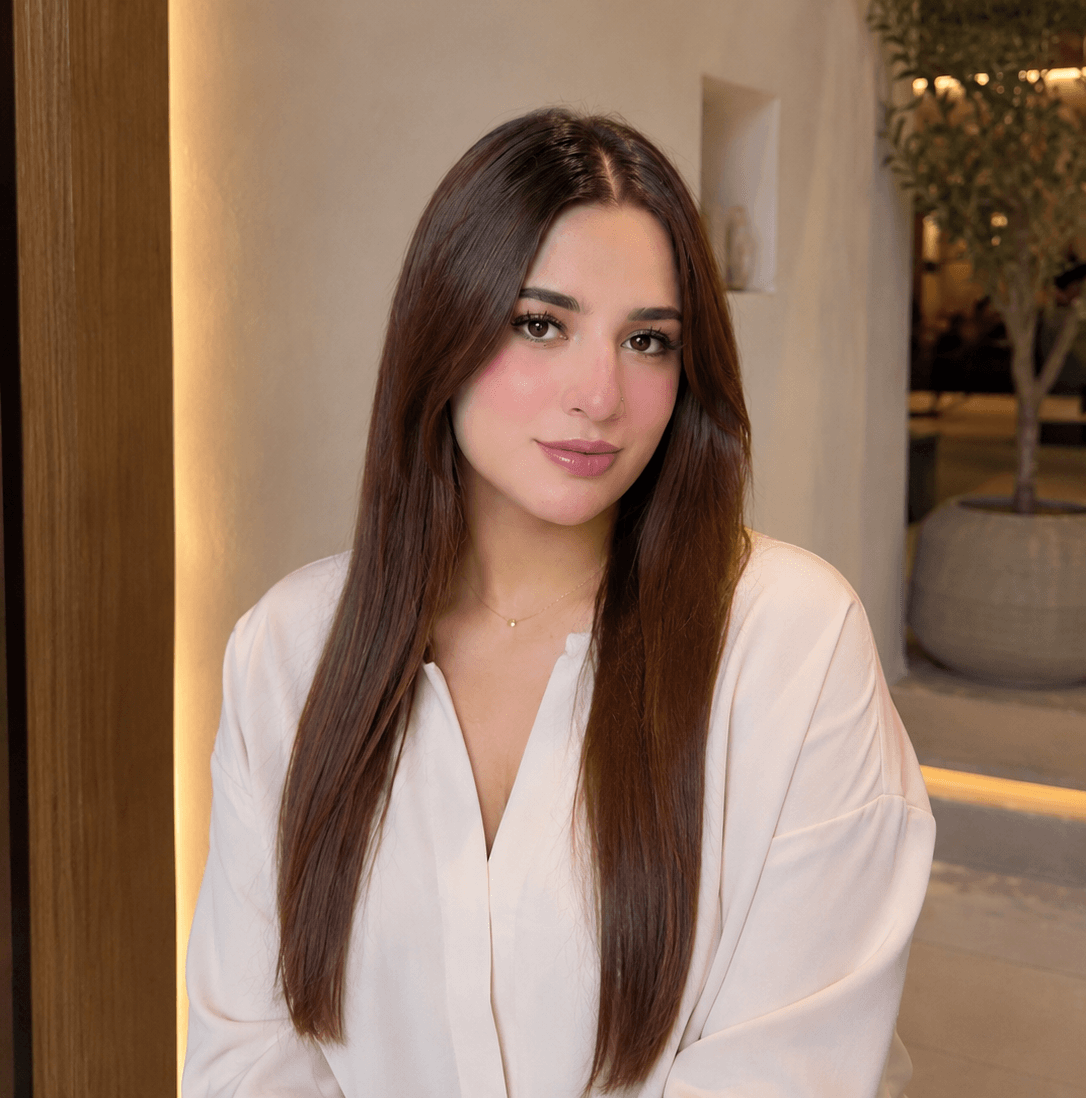
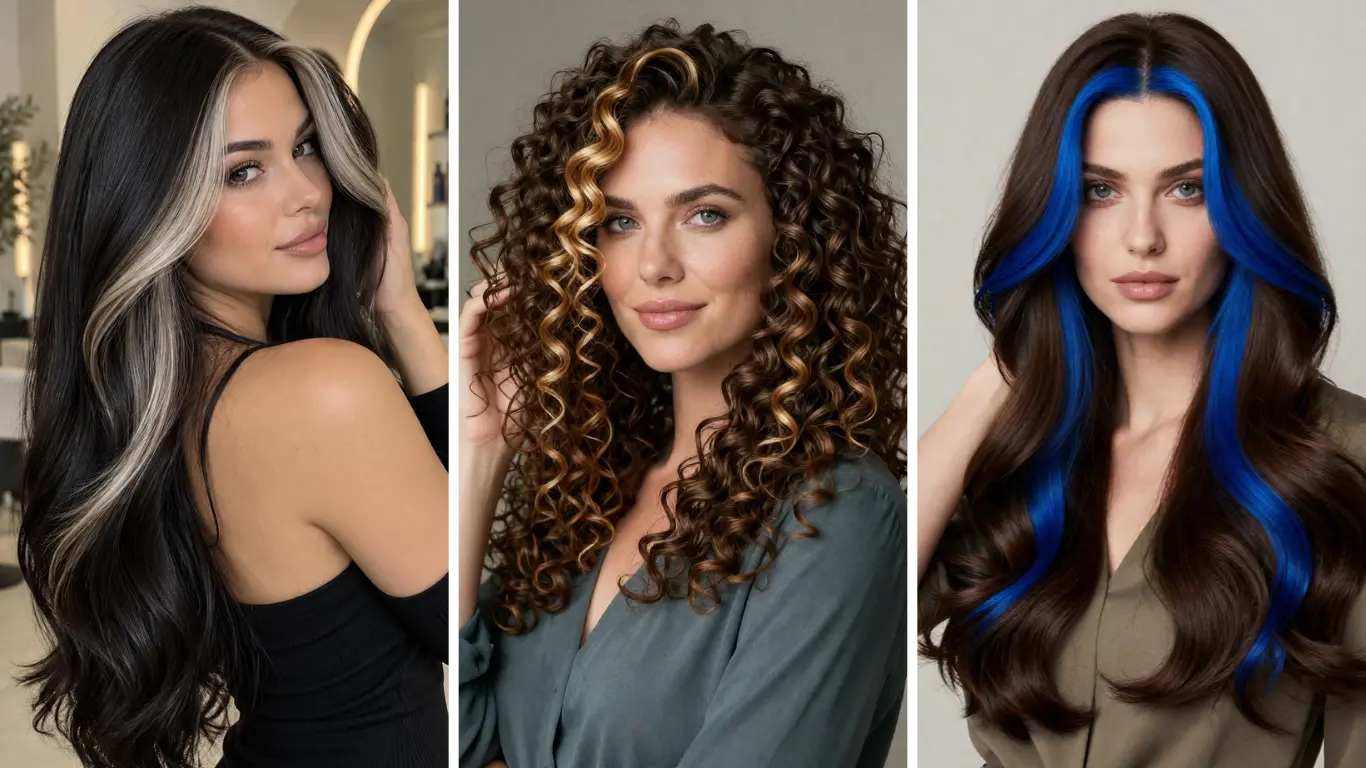
Money piece hair is a coloring technique that lightens or adds bold color to the strands right around your face. It usually covers the front 1 to 2 inches of hair on each side of your part, while the rest of your color stays the same. That’s why people call it a high-impact, low-commitment way to change your look.
It works because lighter strands around your face can brighten your overall look and draw attention to your eyes. You get a fresh color without committing to an all-over dye job.
Below, you’ll find 17 money piece hair ideas sorted by base color, along with simple guides to choosing your shade, talking to your colorist, and keeping the color fresh.
Table of Contents
What Is a Money Piece?
A money piece is a pair of bright, hand-placed sections of color at the front of your hair, one on each side of your face. Most of the time they’re lighter than your base, but they can also be a bold shade like red, pink, or blue.
So why the name? The short version: those bright front pieces look expensive, and they’re the part everyone notices first. Your stylist only has to color a small section, but it gets the credit for the whole look.
A few things make it so popular right now:
- It works on every length, texture, and base color.
- Roots at the back don’t show, so there’s less upkeep than all-over highlights.
- You can go soft and sun-kissed or loud and high-contrast.
One thing to know: a money piece isn’t the same as balayage. Balayage spreads color through the whole head. A money piece stays at the front. Many people do both together, and our balayage colors guide covers the full-head side.
Picking a Shade for Your Base Color and Skin Tone
The easiest way to choose is to start with your undertone, not your base color.
If gold jewelry looks better on you and your skin leans peachy or golden, you’re probably warm. Honey, caramel, copper, and golden blonde will look natural. If silver looks better and your skin leans pink or rosy, you’re probably cool. Ash blonde, platinum, and icy tones are your best bet. Can’t tell? You may be neutral, and you can wear either side.
Then think about how much contrast you want. A shade or two lighter than your base reads soft and natural. Four or more shades lighter looks bold and graphic. Neither is better. It’s about how much attention you want near your face.
Short hair works too, as long as the front pieces are long enough to hold the color. Your face shape matters less than people think. A good colorist can adjust the width and placement to suit you.
Find the Shades That Suit You
Not sure if you’re warm, cool, or neutral? Take the Hair Color Quiz to find which shades work best with your skin tone before you book your appointment.
Take the Hair Color Quiz →Not sure where to start? Our hair color quiz takes the guessing out of it.
What to Tell Your Colorist
I want a money piece isn’t enough. It could mean a thin whisper of color or a thick, bold panel. Here’s what helps your colorist get it right the first time.
Bring two or three photos, and say what you like about each one. Is it the width? The brightness? The way it blends?
Then talk about these details:
- Width. One inch looks subtle. Two inches looks bold.
- Placement. Ask if the color starts at your side or a little behind it and how it will look when you move to the side.
- Technique. Hand-painted strands blend softly. Foils give you a cleaner, brighter pop.
- Toner. This final step sets the shade. The shade can be warm, cool or neutral.
- Hair health. If your hair is already dry or damaged, say so up front.
Doing it at home? Be careful. Bleach in the front is very noticeable if it goes uneven, and a stripe that’s too orange is hard to fix. For this placement, a professional is the safer choice.
Maintenance and Grow-Out
The nice thing about a money piece is how it grows out. The color starts at your roots, so there’s no hard line to hide, and many people go a couple of months between touch-ups.
What changes faster is the tone. Light shades can drift warm or brassy, and that’s what you’ll notice first. A few habits help:
- Use a sulfate-free shampoo so the color lasts longer.
- If you’re blonde, use a purple shampoo about once a week to keep yellow tones down.
- Ask your colorist about a gloss between visits. It brings back shine and refreshes the tone.
- Go easy on hot tools, since heat fades color and dries out lightened hair.
Bright fantasy shades like blue and pink fade faster than natural tones, so plan for more frequent refreshes.
17 Money Piece Hair Ideas
1. Classic Blonde Money Piece on Dark Brown Hair
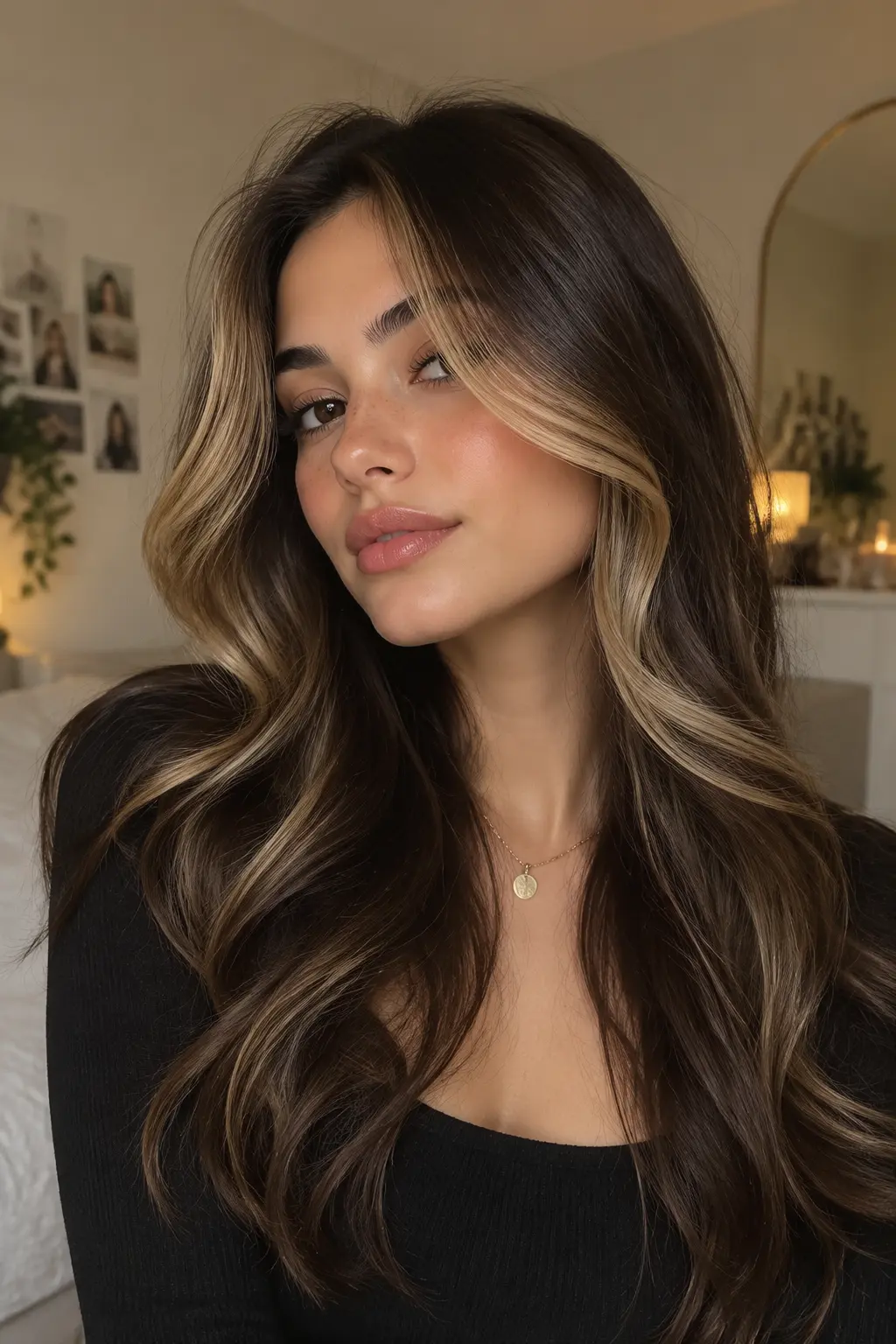
Blonde highlights around the face area provide a nice contrast against the dark brown hair. Golden blonde highlights can be used on the front, while other blonde shades will help you achieve a gentler effect. The rest of your hair can stay natural, yet it will definitely give you an eye-catching result.
2. Blonde Money Piece on Brown or Brunette Hair
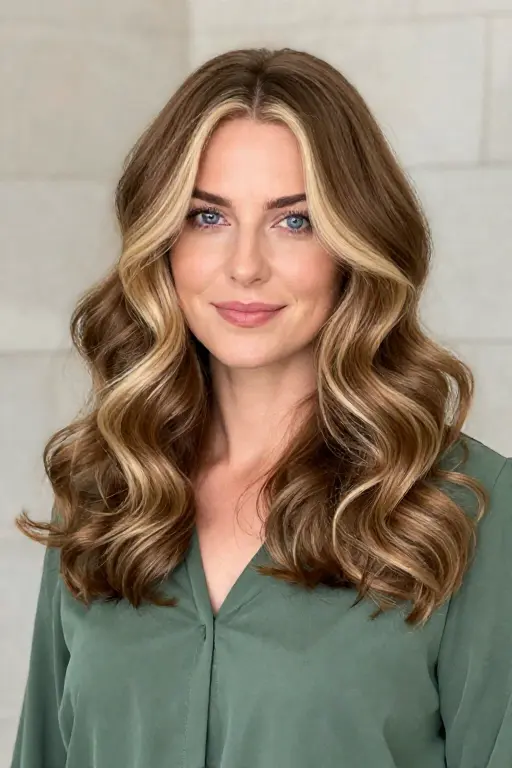
Brown hair pairs nicely, with blonde shades. Honey blonde adds warmth. Beige blonde gives a finish. Sandy blonde creates a sunlit effect.
Choose a shade that works with your base color if you want the front pieces to blend in.
Loose curls or waves can help show the tones.
3. Subtle Face-Framing Money Piece on Dark Hair
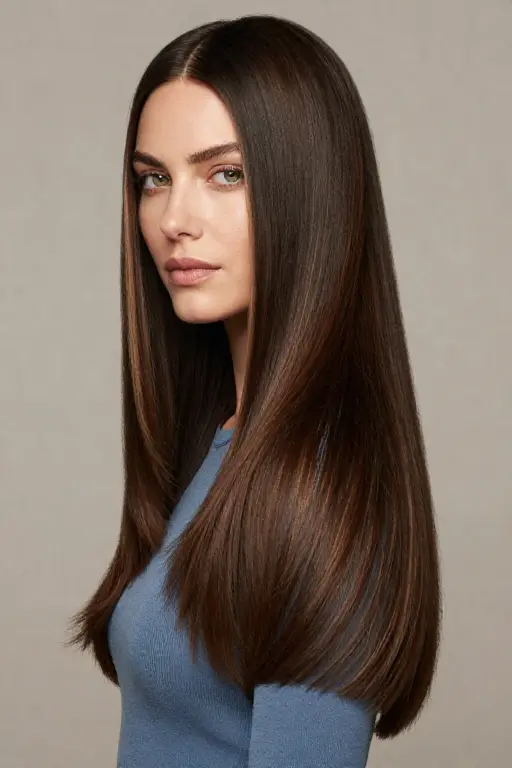
When it comes to a low contrast style, request some light-colored highlights on the front hair instead of dark and bold sections. Light caramel or light brown can bring out depth in your hair without hiding the dark base underneath. Start with a small number of highlighted strands, then add more as needed until it gets brighter.
4. Money Piece on Black Hair
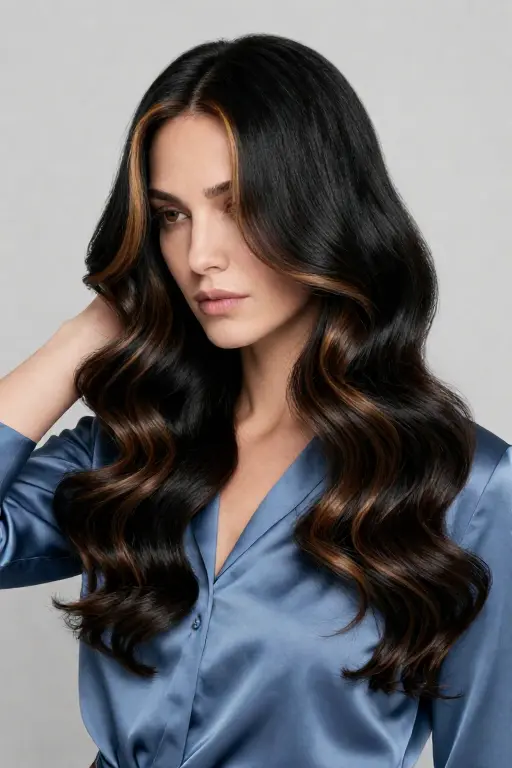
For black hair, brown highlights will go well at the front. You can either stick with a color that is close to your original hair color or opt for something that contrasts more. Here are some options to consider:
- Dark chocolate: Blends softly with black hair.
- Caramel brown: Adds warmth and a little contrast.
- Bronze: Gives the front sections a golden finish.
The amount of contrast depends on your starting color. Some shades may need lightening before they show clearly, so ask your stylist which option will work best for your hair.
5. Blonde Money Piece on Black Hair
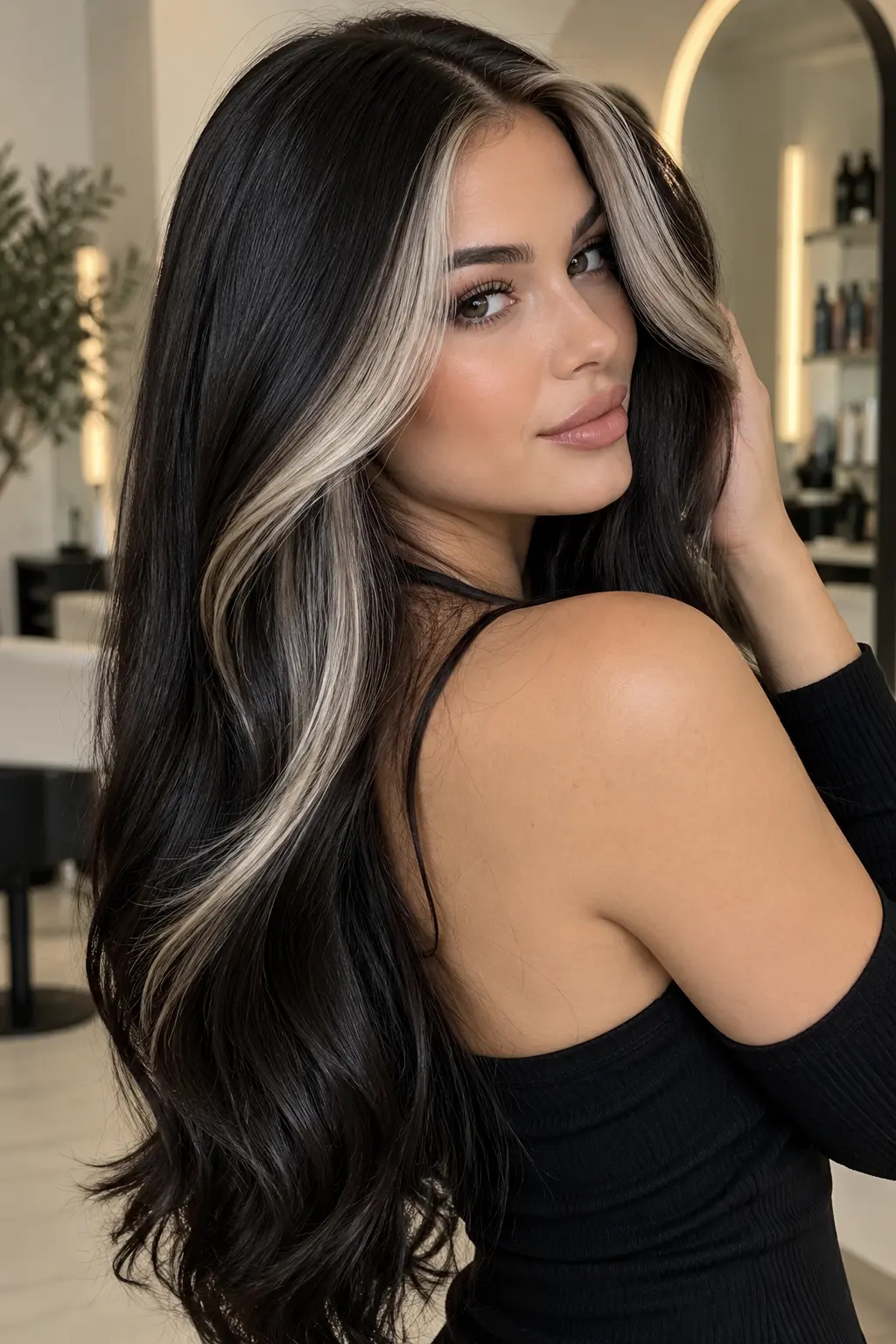
Now for the dramatic one. Jet black with platinum or silver at the front is pure high contrast. It looks amazing, but black hair has to be lightened a lot to get there, and sometimes that takes more than one session. Plan for it. Talk to your colorist about how to protect your hair as you go.
6. Caramel Money Piece on Brown Hair
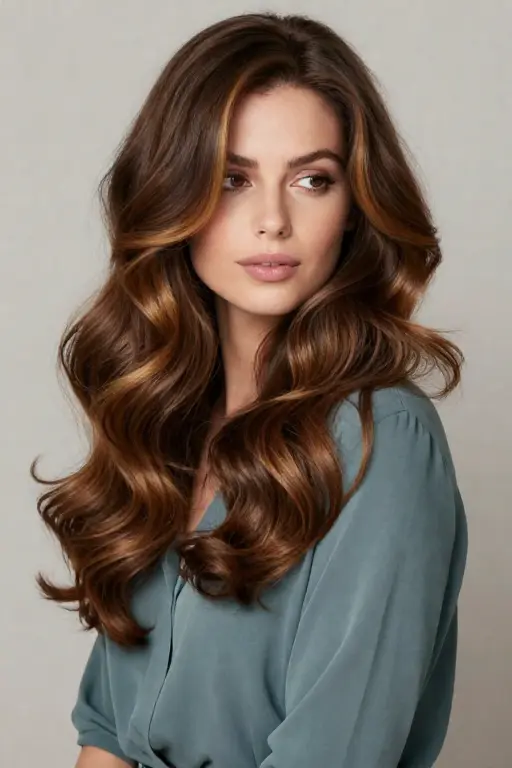
Caramel is a lovely choice for adding warmth to brown hair. The soft golden-brown shade creates a gentle contrast around the face and adds a subtle glow to your look.
If you want caramel highlights throughout your hair instead of just at the front, explore our balayage hair color guide.
7. Honey Brown with a Soft Money Piece
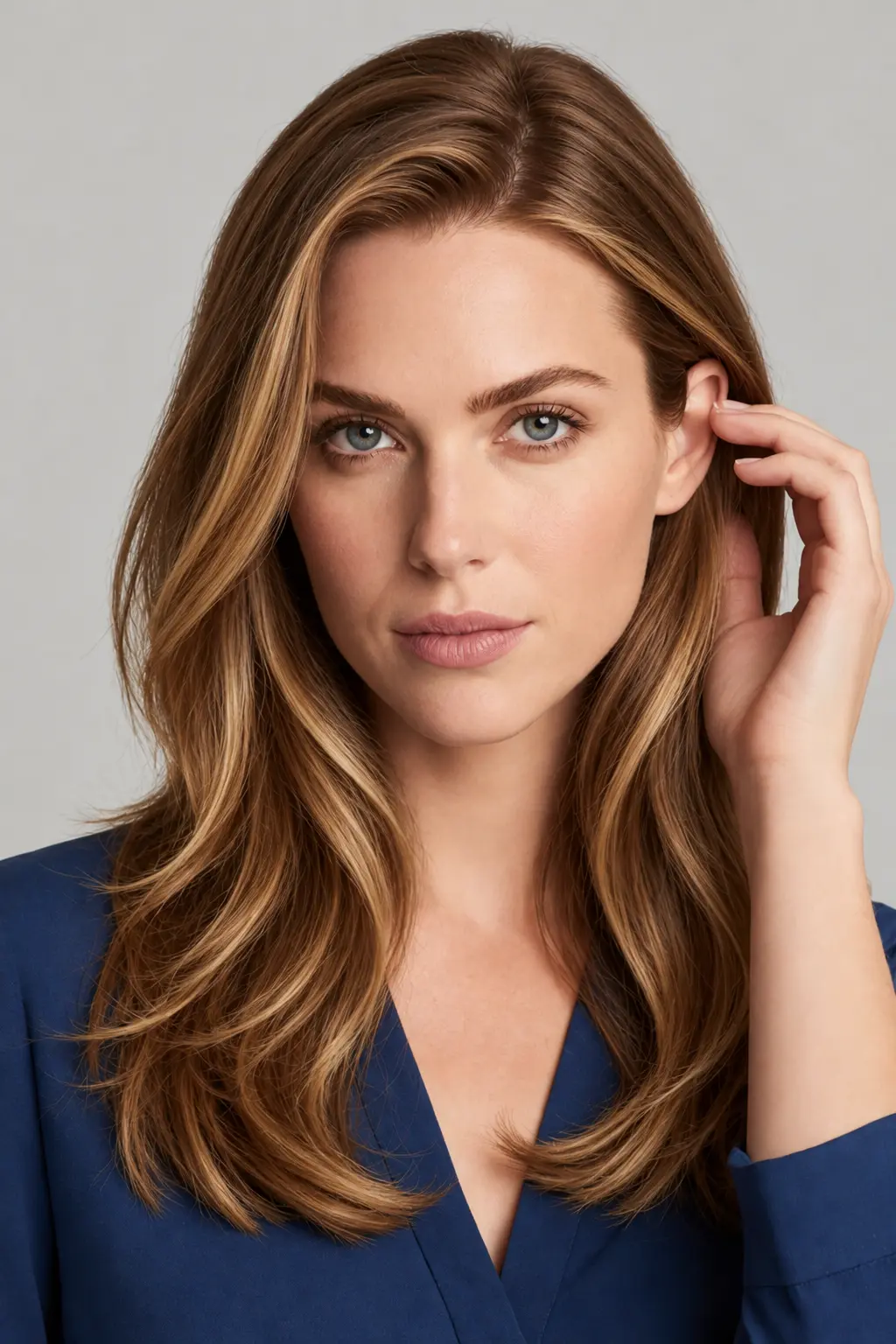
Honey brown hair looks even warmer with a few golden pieces around the face. You only need a small difference between your base color and the front sections to make the style stand out.
It’s a nice choice if you want to try a money piece without making a big change to your hair color.
The result looks soft and blends easily with the rest of your hair.
8. Reverse Money Piece
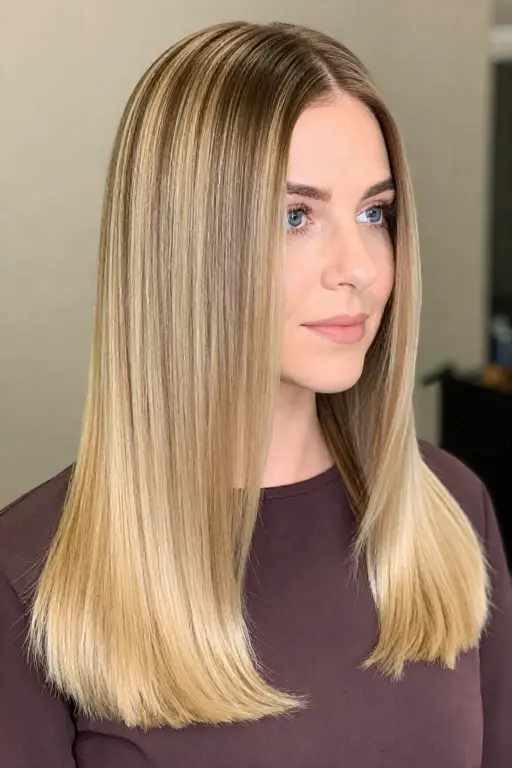
Dark front pieces give blonde hair a different look without adding more blonde. You can choose a rich brown for a clear contrast or a softer brown if you prefer something less noticeable. The darker color brings attention to the face and adds depth near the roots.
It’s a good option when you want to change your look but would rather skip the bleaching process.
9. Blonde Money Piece on Red Hair
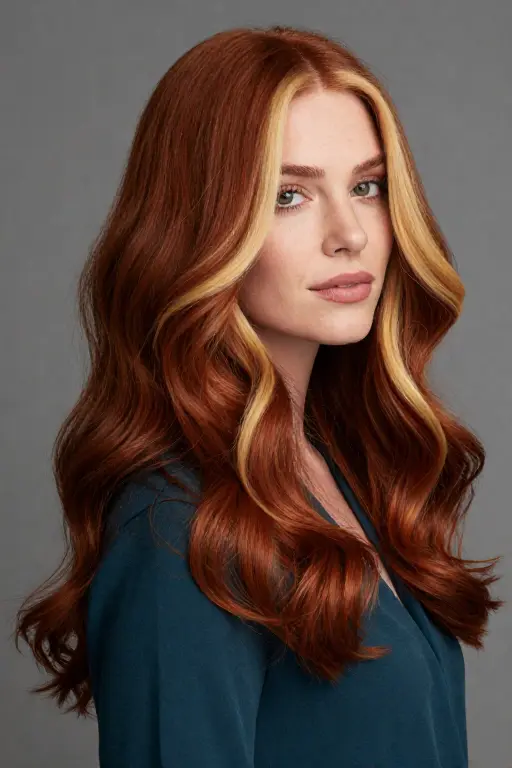
Red hair and blonde highlights make an eye catching combination. Try warm golden pieces with copper hair or a muted blonde with auburn. The lighter strands can be narrow and subtle or thick enough to stand out.
Your choice depends on how much contrast you want near the front.
10. Red Money Piece on Black Hair
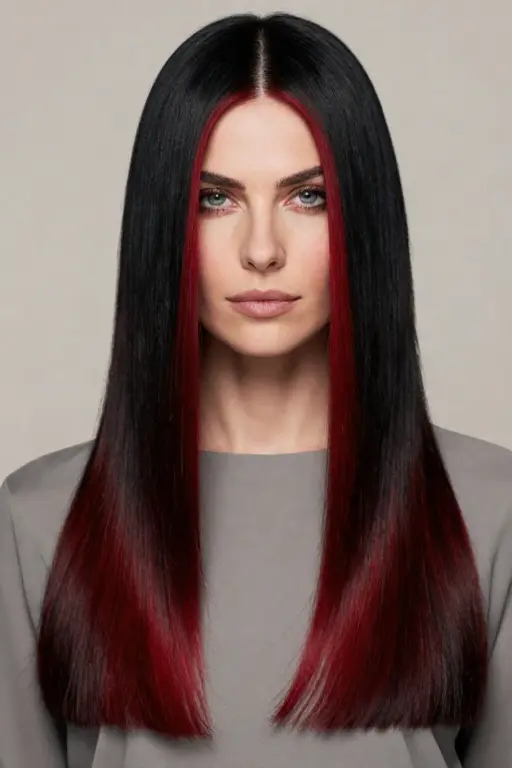
Red front pieces stand out against black hair, especially in cherry red or deep mahogany. The darker the base, the more preparation may be needed to make the red visible. Your stylist may need to lighten the front sections before applying the color.
A color gloss can help keep the red looking rich, although regular touch ups may be needed as it fades.
11. Copper Hair with a Blonde Money Piece
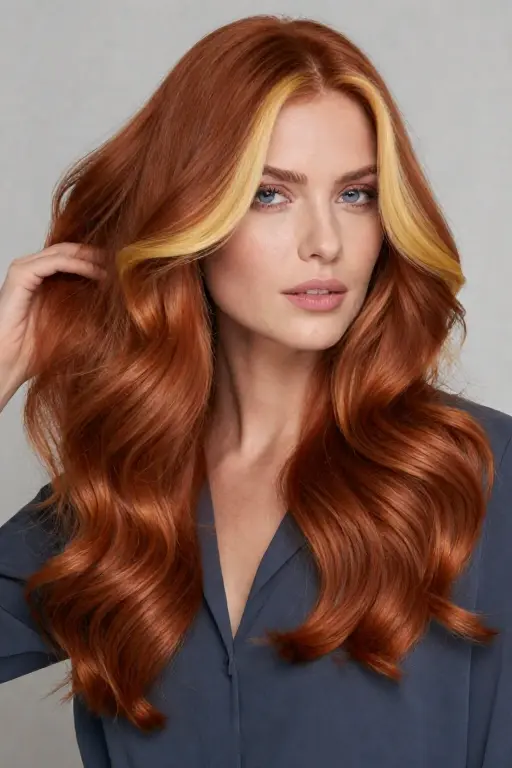
Already copper? A golden blonde front makes the copper look richer, because you’ve given it something lighter to play against. Stay on the warm side of blonde, and it looks natural.
If you’re still choosing a copper shade, our hair color ideas guide has plenty to pick from.
12. Blue Money Piece
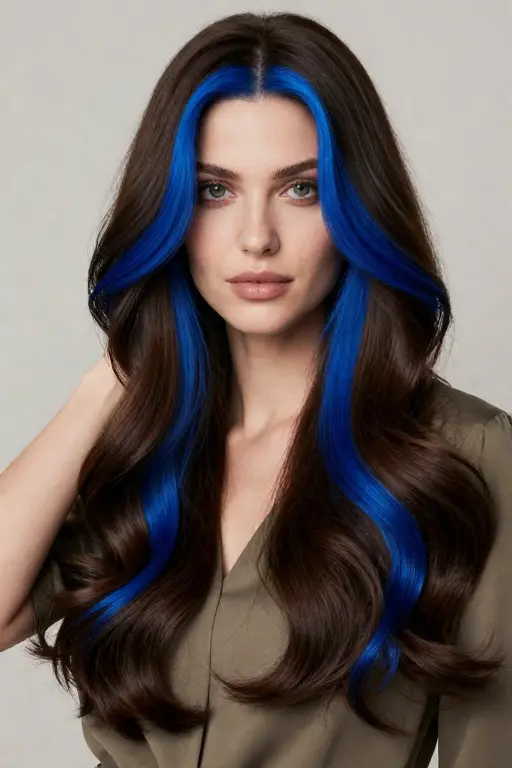
Navy is the obvious choice. Navy on darker hair can look black but becomes a deep blue in the light. Would you like something more attention-grabbing? Try electric blue or even pastel shades for lighter hair. The purple shade can work similarly if you would prefer not to use the blue color.
13. Pink Money Piece
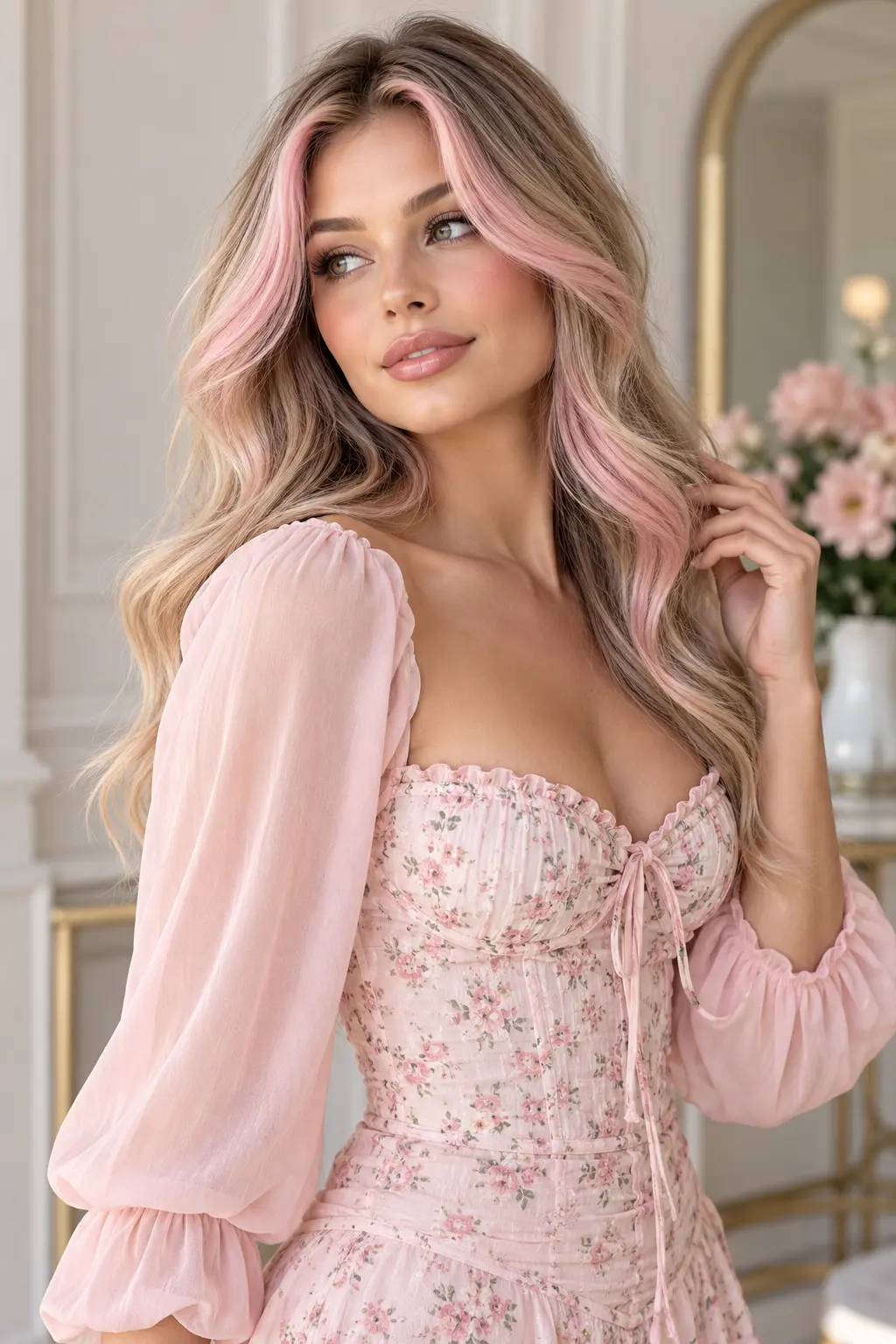
Blush pink on light hair is fresh and pretty. Magenta on darker hair is a daring choice and has a bit of a rock n’ roll vibe to it. Because pink washes out quickly, it can be a temporary coloring choice. Plus, if your hair is blonde, you don’t have to use any additional bleach.
14. Light Blonde with a Brighter Money Piece
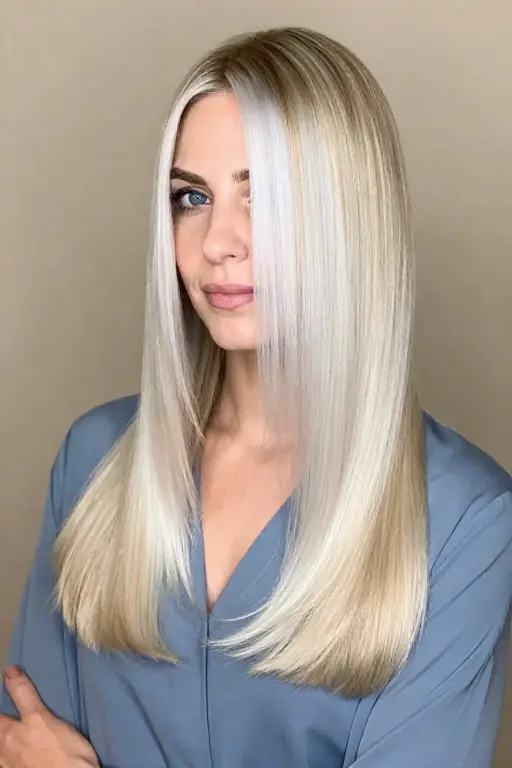
If you have hair that is already light blonde, go ahead and add some brightness to the frontal portions of the hair. This adds focus to your face while ensuring the coloring remains very natural looking.
If you want the look to be cool, icy blonde is ideal.
However, if you want something warmer, buttery blonde will work nicely.
15. Dirty Blonde with a Money Piece
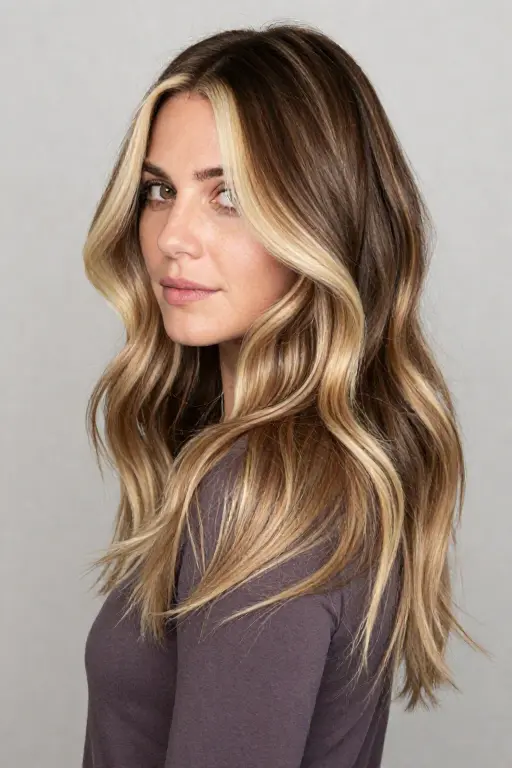
The dirty blonde may sometimes appear too simple on its own. Adding a bit of lightness to the frontal section of your hair will add depth and volume to your style without having to make radical changes to your overall color.
16. Money Piece with Bangs
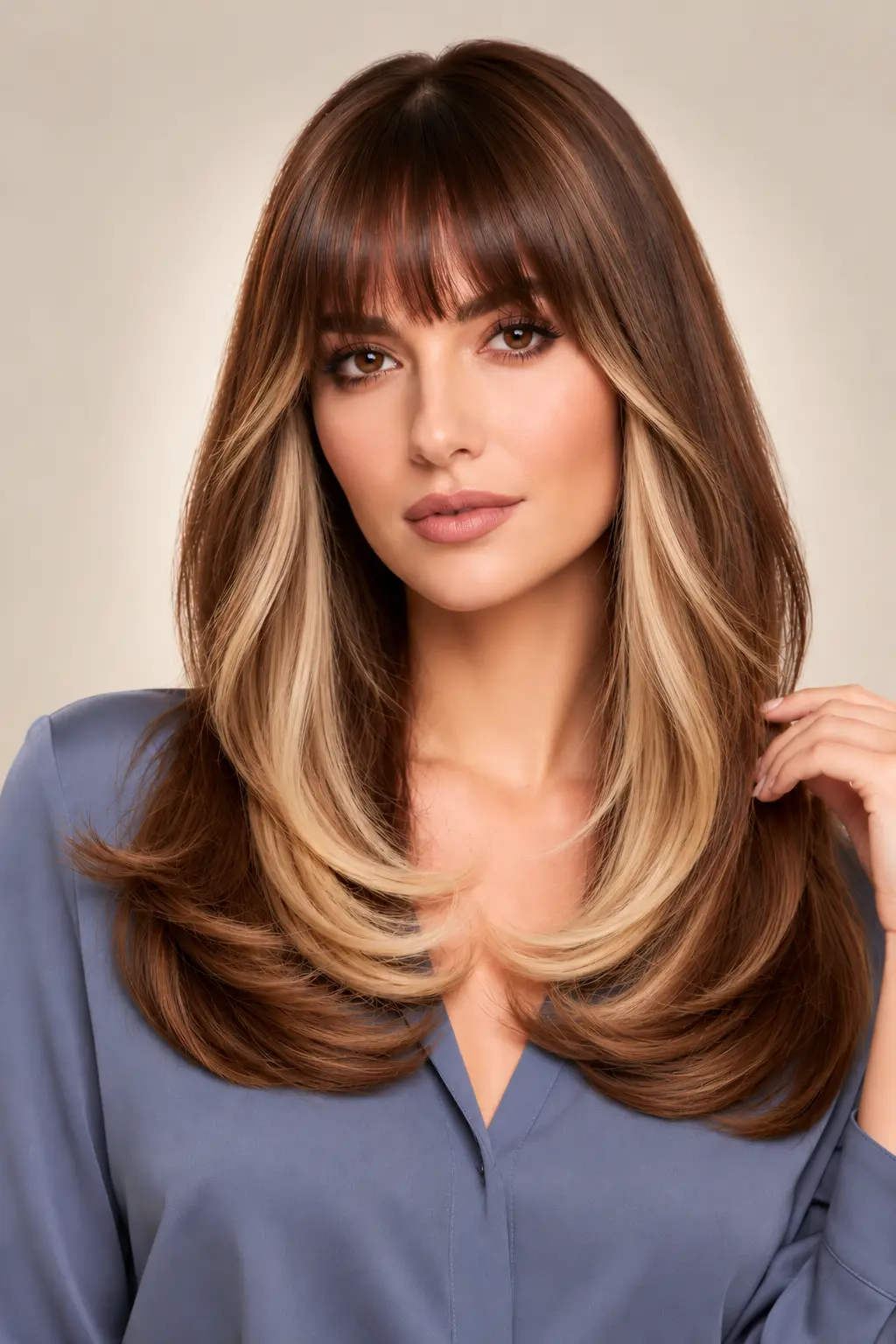
Yes, you can do both. The main thing is to tell your colorist exactly how you wear your bangs, because you probably don’t want to bleach the whole fringe. Often the color is placed so it blends with the sides of the bangs and frames your face from there.
This look pairs especially well with soft, parted styles. Explore our guide to curtain bangs styles for more inspiration.
17. Money Piece on Curly Hair
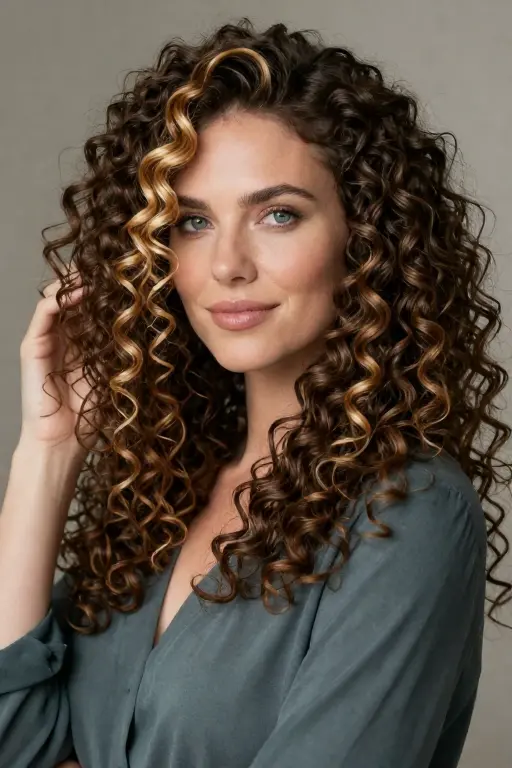
On curls, two perfectly straight stripes can look odd, because curls don’t fall in lines. A good colorist will place the color curl by curl so it shows up in the spirals and moves with them. Color your hair when it’s dry and curled so they can see where the pieces really fall.
For more inspiration, explore our guide to curly hairstyle ideas
More hair ideas to save
 Hair GuidesWhy Is My Hair So Frizzy? Causes and Simple Solutions
 Hair GuidesHair Color Level Chart: What Levels 1 to 10 Mean
 HaircutsHow to Style a Butterfly Haircut for Every Hair Type
 Hairstyles25 Beautiful Half Up Half Down Hairstyles for Every Hair Type and Occasion
 Hair GuidesWhat Hairstyle Should I Get? Find a Style That Fits You
 Hairstyles25 Best Braided Hairstyles: Every Type of Braid to Try in 2026
 Hair GuidesShould You Wash Your Hair Before a Haircut?
 HaircutsHaircuts for Thick Hair That Make Hair Easier to Manage
 HairstylesEasy Hairstyles You Can Create in Minutes
 Hairstyles20 Goddess Braid Hairstyles You’ll Want to Copy
 Nail Art Designs13 Simple Nail Ideas That Are Easy to Try at Home
 Cargo & DenimHow to Style Cargo Pants for Every Season and Occasion
- Free toolHair Color ChartLevels 1 to 10 with shade names, so you know how far your color can go.See the chart
Frequently Asked Questions
What Is a Money Piece in Hair? −
Why Do Hairdressers Call It the Money Piece? −
Is Money Piece Still in Style? −
Who Looks Good with a Money Piece? −
How Long Does a Money Piece Last? −
Final Thoughts
If you’ve been wanting to change your hair but don’t want to commit to a full color, this is probably the easiest place to start. Pick a shade that fits your undertone, show your colorist a photo or two, and be honest about how much upkeep you want.
You don’t need to go bold. Some of the best money pieces are the ones people can’t quite put their finger on. Start small, see how you like it, and go brighter next time if you want.