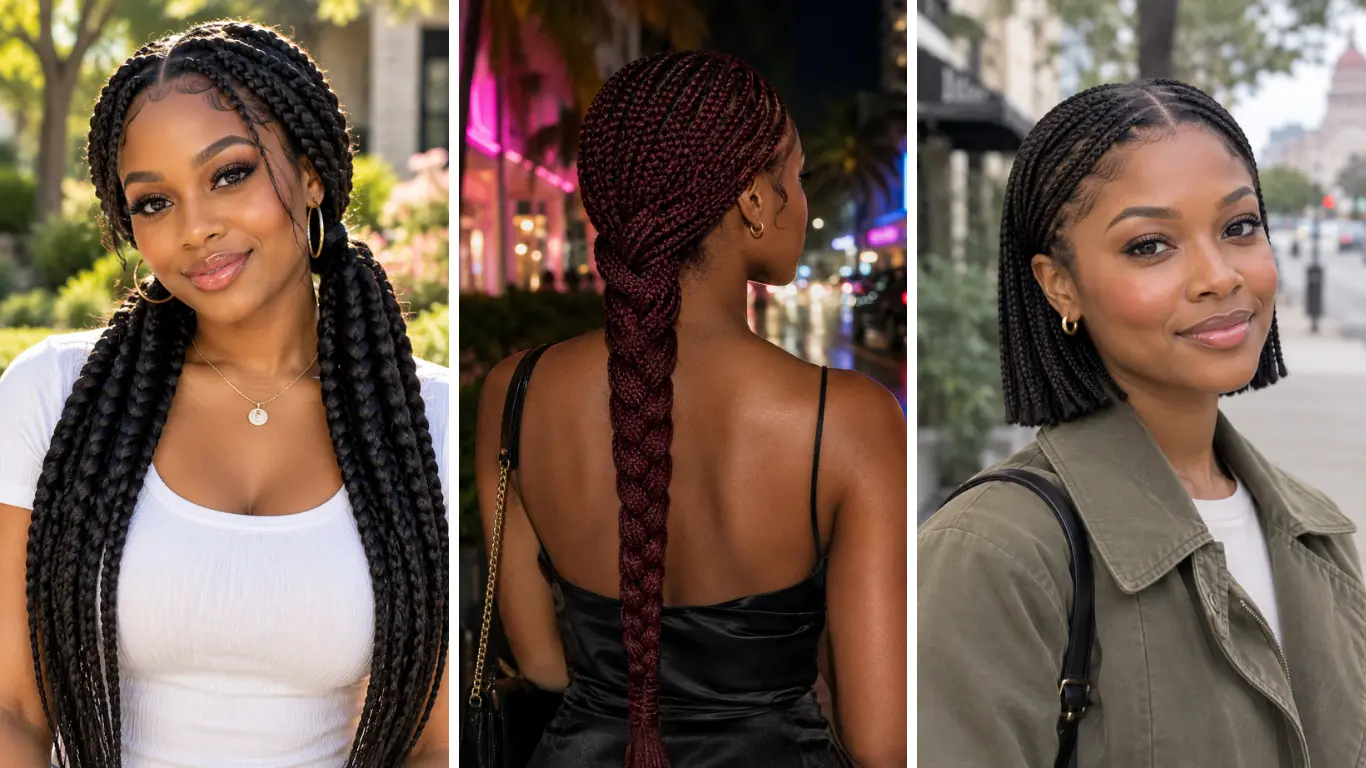
Knotless braids are a protective style where the extension hair is fed in a little at a time, so there’s no hard knot sitting at your roots. The braid starts with your own hair and builds from there, which is why it lies flatter and feels lighter than the traditional kind.
Below you’ll find how they differ from box braids, how to pick a size, 16 styles that each look completely different, and what to know about lasting power and care.
What Are Knotless Braids?
Here’s the idea. Your braider starts a braid with a small section of your natural hair. After a few twists, they add thin pieces of extension hair, one at a time, and keep braiding down. Nothing gets tied in a knot at the base.
That’s the whole reason for the name. Traditional braids start with a knot of extension hair at the root. These don’t.
The result is a flatter, smoother start at the scalp, and a style that feels light enough to wear right away.
Knotless vs. Box Braids
People mix these up constantly, and from a distance they look alike. Up close, the difference is at the root.
Box braids begin with a knot, so the base can feel tighter and a little bulkier. Knotless braids, on the other hand, start with your own hair and add extensions little by little. That makes them lighter and gives a smoother, flatter look at the part. There’s usually less tension on the scalp, too.
Box braids have a few advantages. Some people find they hold their shape longer, and they can install faster. If your natural hair is very short, the knot also gives the extension something to grip. So neither one is better for everyone.
Our box braids guide shows the traditional version.
| Size | The Look | Time in the Chair | Best For |
|---|---|---|---|
| Small | Fine, detailed, looks fuller | Longest, can take most of a day | Updos and a polished finish |
| Medium | Classic and balanced | Moderate | First-timers and everyday wear |
| Large | Chunky and bold | Shorter | A statement without a long appointment |
| Jumbo | Thick, dramatic | Fastest | Fewer braids and less tension at the part |
Pros and Cons of Knotless Braids
Knotless braids are popular because they create a smooth look at the roots, but they also have a few things to consider before choosing them.
Pros
- The roots look flatter and more natural.
- They can feel lighter around the scalp when installed correctly.
- You can wear them loose or try different updos.
- They work with different braid sizes, lengths, and colors.
Cons
- Installation can take several hours, especially for small braids.
- They may cost more than traditional box braids.
- The roots can become fuzzy as your natural hair grows.
- Braids that are too tight or too heavy can still damage your edges.
Your comfort matters more than the size or length you choose. Ask your braider to avoid excessive tension and choose extensions that feel lightweight.
16 Knotless Braids Styles
By Size
1. Medium Knotless Braids with a Middle Part, Worn Down

Start here if you’ve never done braids. Medium size, a clean middle part, and everything hanging loose past your shoulders. Most braiders do this one all the time, so you’re not asking for anything unusual. It goes with every outfit and it doesn’t need any styling at all.
2. Large Knotless Braids in a High Ponytail
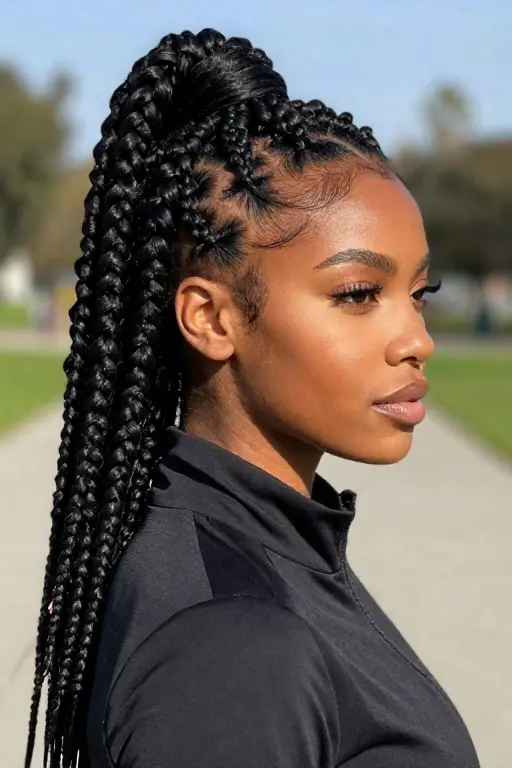
Chunky braids with square sections gathered at the top of your head. Big braids are quicker to do. The ponytail helps take the load off your neck. If you want it to feel gentler, leave a few braids loose at the front. Simple to wear when going to the gym or having dinner.
Big braids like these also look good in more ponytail shapes, which you’ll find in our braided ponytail guide.
3. Jumbo Knotless Braids in Low Pigtails

Two thick pigtails sit low at the back of the neck each formed from five or six braids. They give off a vibe without looking too young or silly. Jumbo braids are the fastest to install. The pigtails help keep the weight balanced on both sides of the head.
4. Small Knotless Braids in a Low Nape Bun
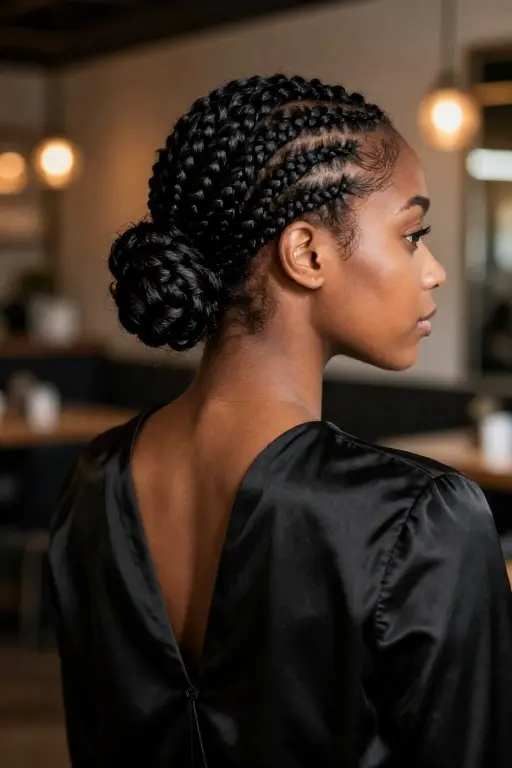
Small braids take the longest to install, so it helps to have a plan for them. Twist all those fine braids into a low bun at the nape and you get a tidy, polished shape that works for the office or a wedding. Thin braids also make your hair look thicker, so the bun comes out fuller than you’d expect.
Boho and Length
5. Boho Knotless Braids in a Pinned Updo
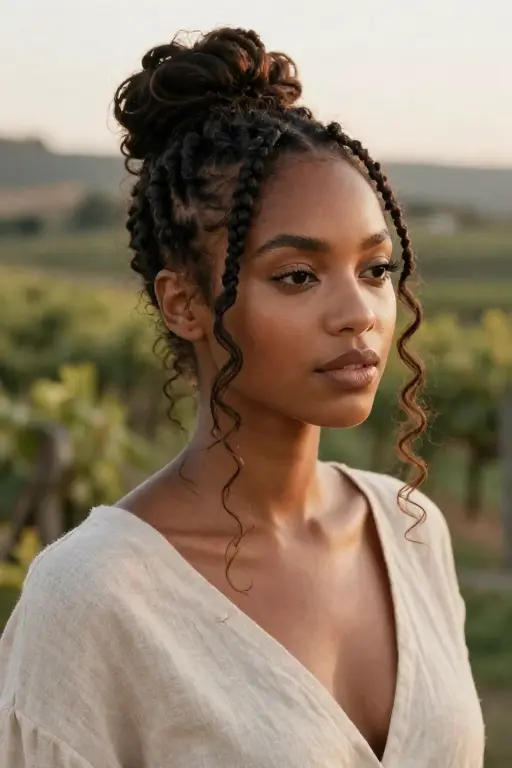
Boho just means you leave out loose strands of hair along the braids so the style looks soft and a little undone. Pin the braids up and those loose pieces curl around your neck and ears.
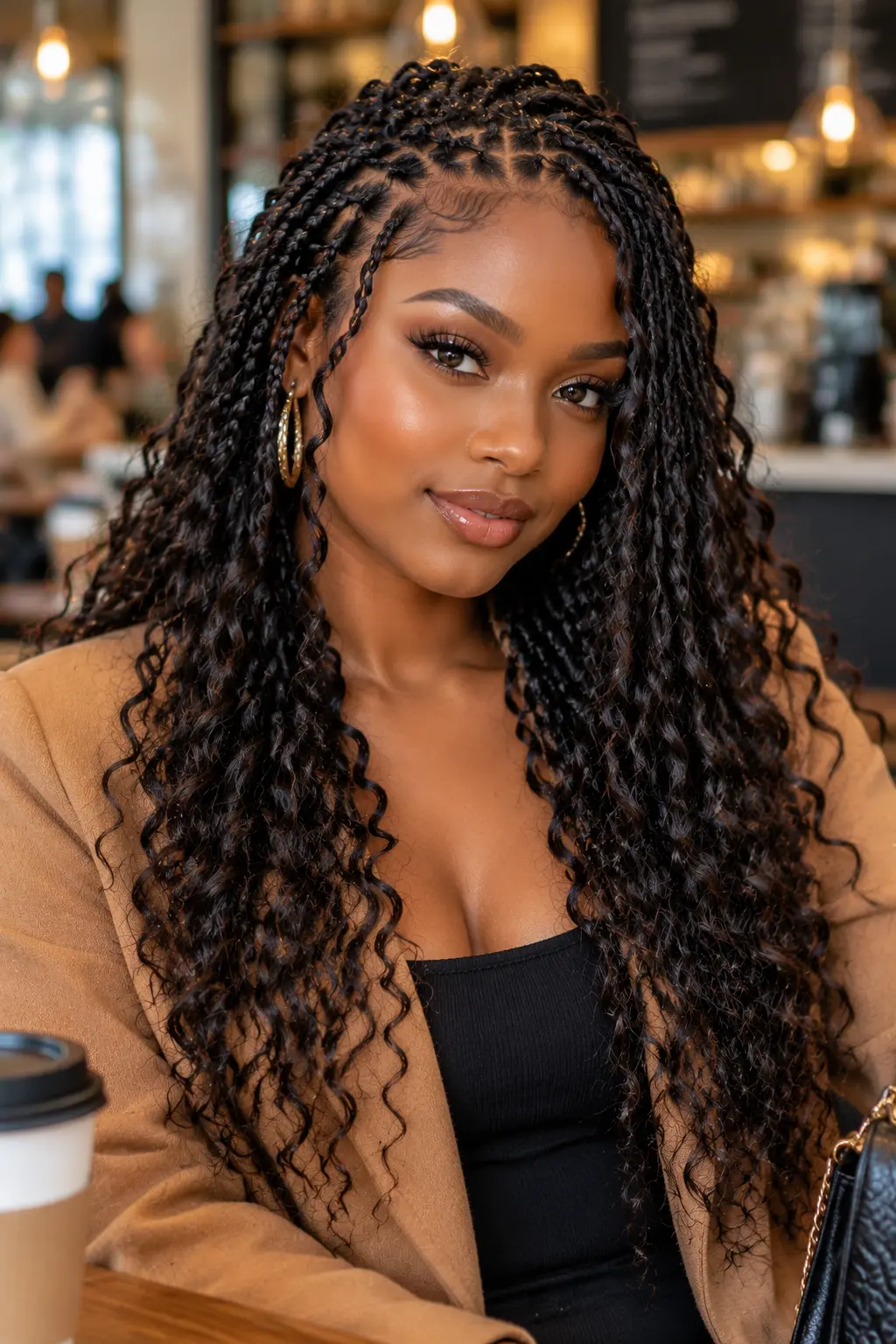
If you want the full boho look worn down, see our knotless braids with curls guide.
6. Short Knotless Braids at Chin Length
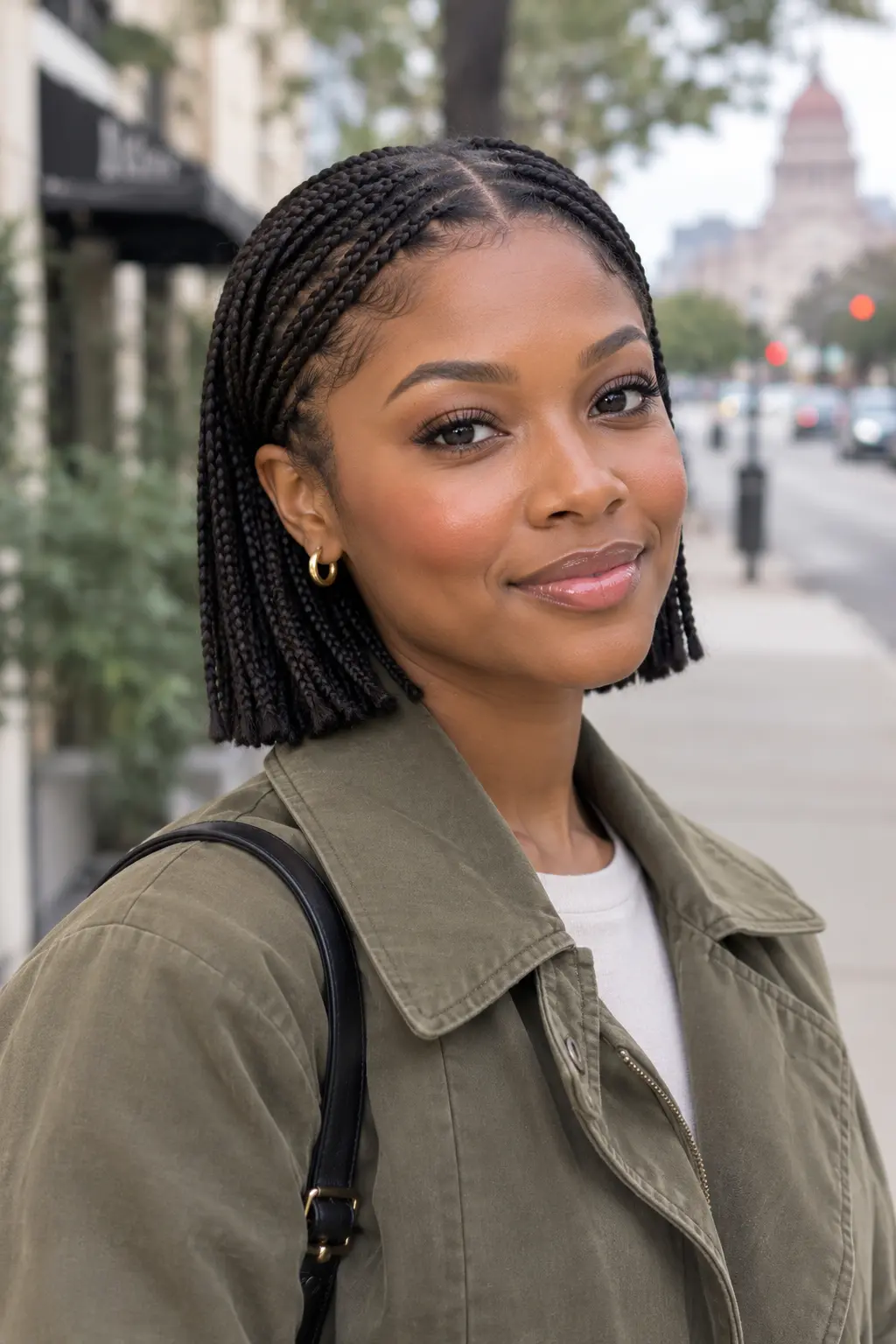
Chin-length braids with blunt, neat ends, tucked behind the ears. It’s the lightest version of this style, and nothing gets in the way when it’s hot. Because they’re short, they’re also quick to install and quick to take out.
7. Extra-Long Knotless Braids with a Heart-Shaped Part

Braids that reach your hips or past, with a heart-shaped part at the front for something a little different. It looks dramatic when you walk. All that length is heavy, though, so ask your braider to keep the braids thin and light to protect your edges.
Style and Color
8. Fulani-Style Knotless Braids with Beads
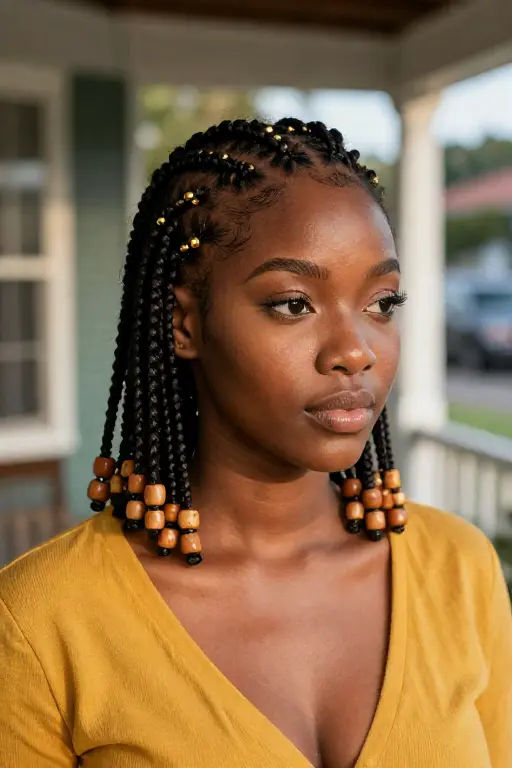
Cornrows run from the hairline back, then turn into knotless braids at the crown. Add beads on the front braids and you’ve got a style that looks detailed from every angle. Our cornrow braids have more on the front-braid part.
9. Honey Blonde Knotless Braids with a Scarf Wrap

Warm honey blonde looks really nice on skin tones. A silk scarf tied around the hairline makes the look feel more planned out. The scarf also helps keep baby hairs under control. Hides the front part. Choose a scarf in a color so the blonde stays the main focus.
10. Burgundy Knotless Braids in One Thick Plait

Gather the braids and weave them into a single big plait down your back. Deep burgundy shows up beautifully in the twists. It looks like a lot of work, but it’s mostly just braiding braids. Great for a day when you want your hair neatly out of the way.
11. Peek-a-Boo Color Knotless Braids with a Claw Clip
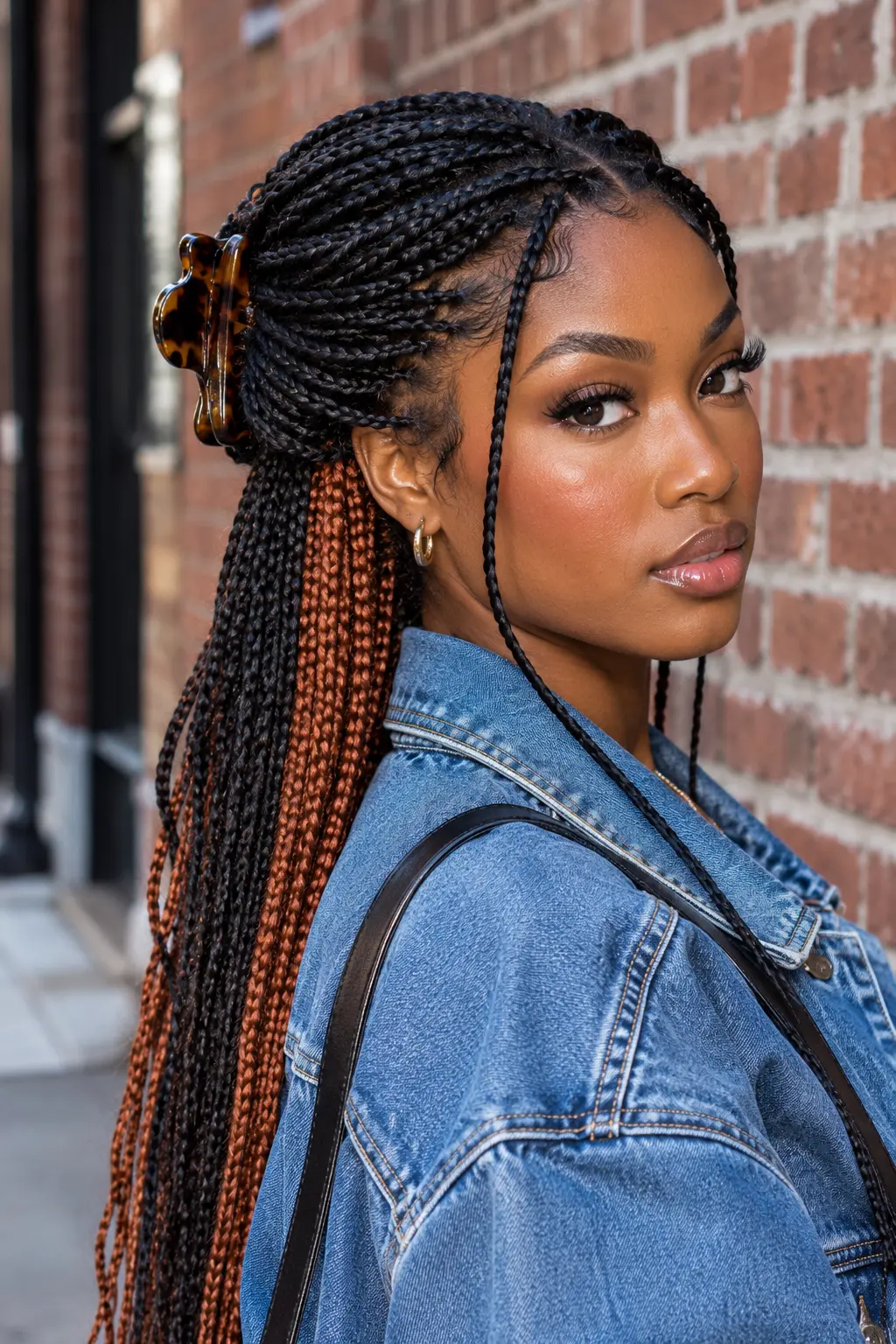
Black braids on top, with copper pieces hidden underneath that only show when you move. Pin the top section back with a claw clip and the color peeks out. Not ready to commit to a bright color all over? This is how to try it.
See our claw clip hairstyles for more clip ideas.
12. Knotless Braids in a Braided Crown
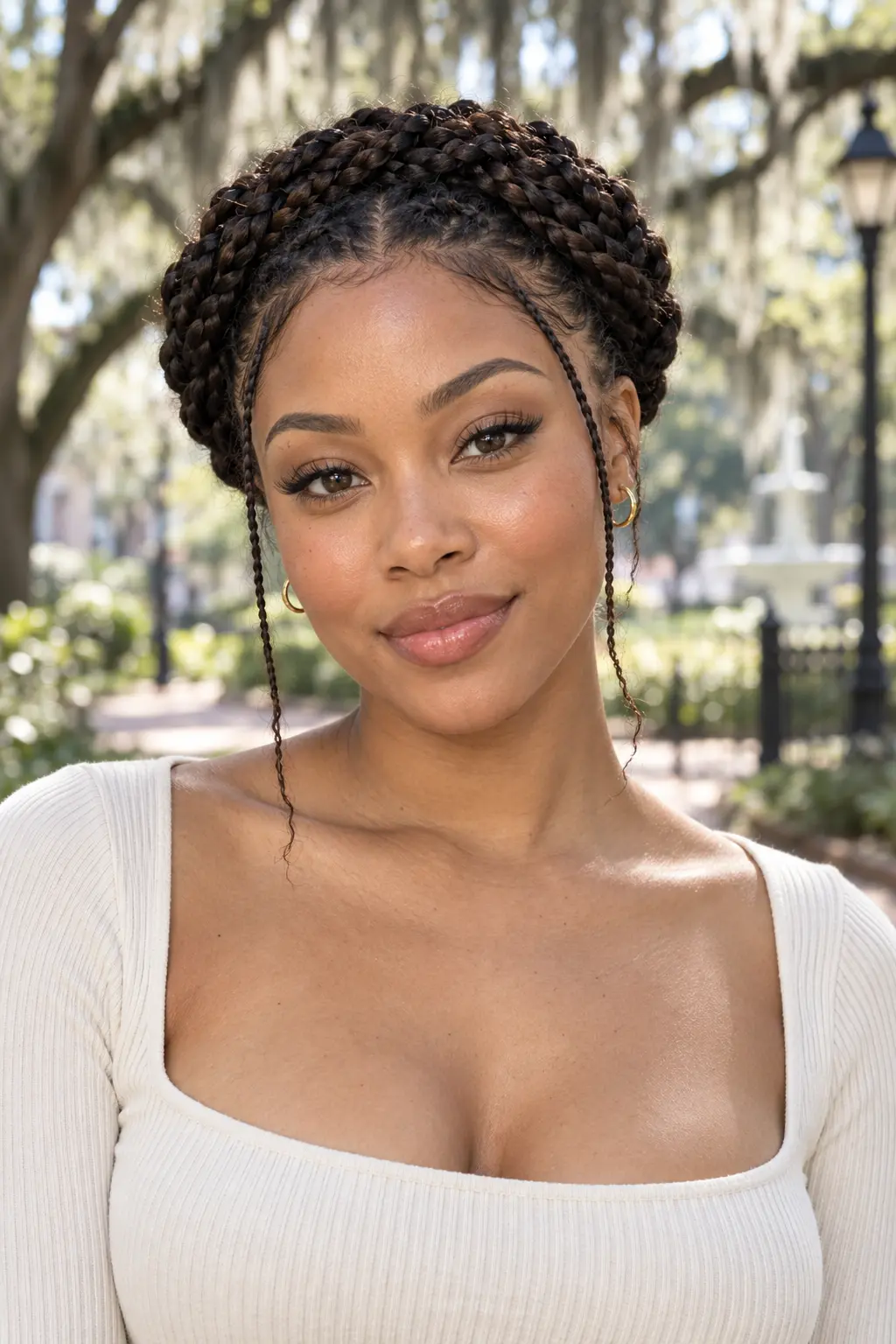
A braided crown wraps the braids around your head like a halo, with the ends tucked in and pinned. It looks regal without being fussy. Medium or small braids work best, because they bend easily and lie flat against your head. Leave two thin braids out by your ears so the crown feels softer. The braids hold each other in place, so you won’t need many pins.
13. Knotless Braids with Colored Gel Band Ends

Seal the ends, with colored bands instead of leaving them loose. The ends stay sleek. Don’t unravel and the pop of color is a fun detail. Bring the braids forward over both shoulders so the bands show.
Quick Mentions
14. Knotless Braids with Curls
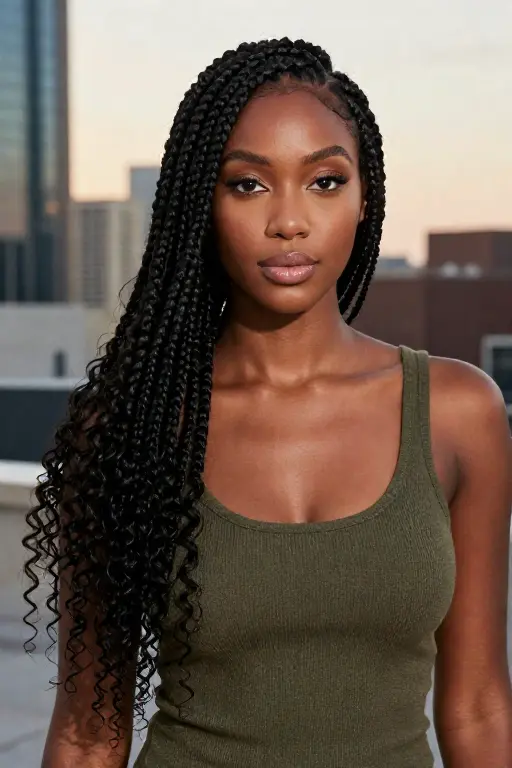
Curly ends, boho strands or full French curls all give braids a bouncier finish. We have a guide on it: knotless braids with curls.
15. Knotless Goddess Braids
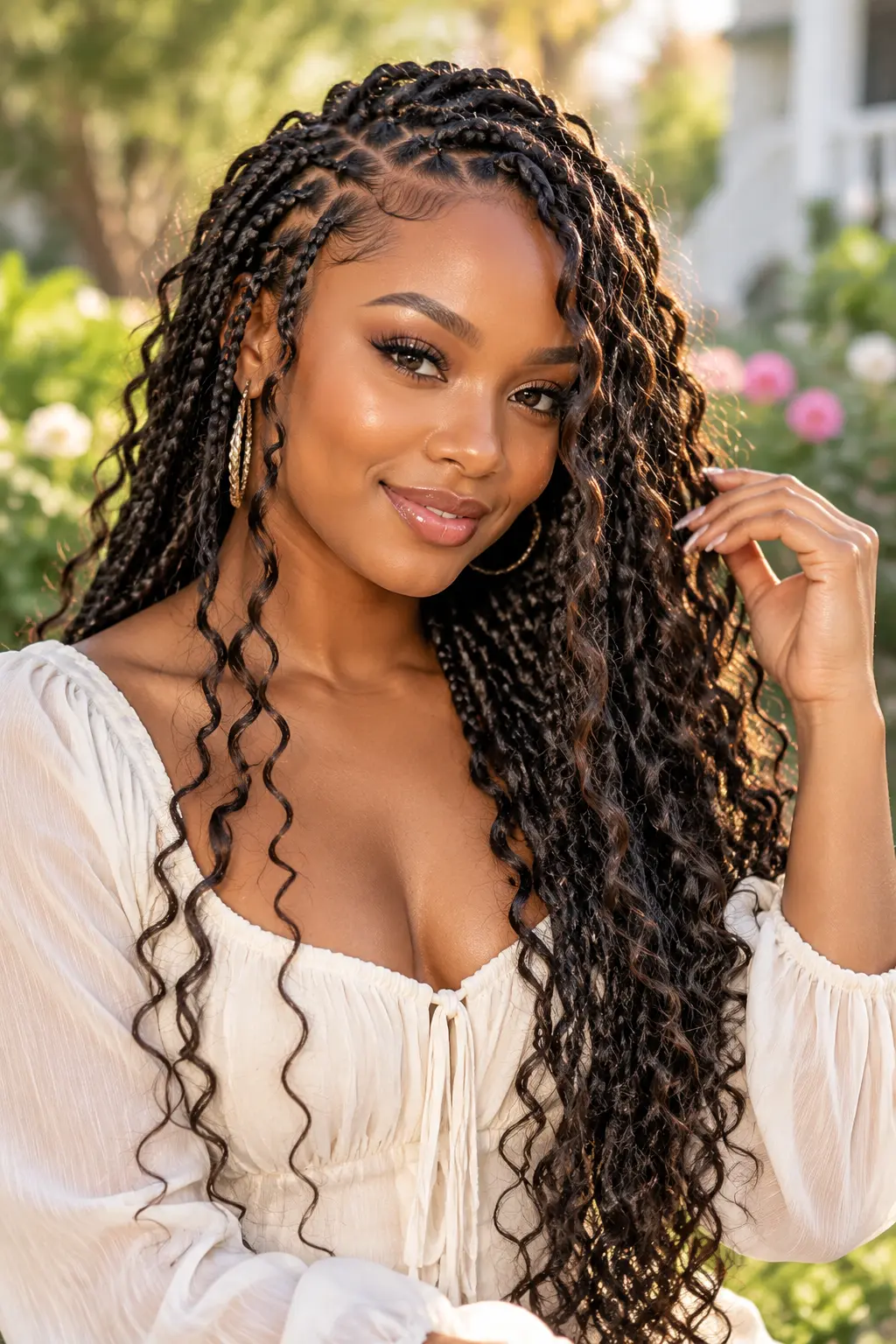
Goddess braids leave loose, wavy pieces through the braids for a romantic effect. It’s a distinct style on its own, so we cover it fully in our goddess braids guide.
16. Knotless Braids for Short Natural Hair
Short hair can still wear this style. With the pick-and-drop method, braiding starts at the root, then drops to loose extension for the length. You get long-looking hair without needing long hair of your own. Ask your braider whether this method works for your length.
How to Choose the Best Knotless Braids for You
The best knotless braids depend on your hair length, the look you want, and how much time you want to spend on installation. Think about these things before booking your appointment.
For a Lightweight Feel
Medium or large knotless braids may be a good choice if you want fewer braids and a shorter installation time. Ask your braider to keep the extensions light so they don’t put too much tension on your scalp.
For a Fuller Look
Small knotless braids create more individual braids and give you plenty of styling options. You can wear them down, make a bun, or gather them into a ponytail. Keep in mind that smaller braids usually take longer to install.
For Short Natural Hair
You don’t need long natural hair to try knotless braids. The right method depends on how long your hair is and what texture it has. Talk to your braider. Ask if your hair is long enough to keep the style in place without putting too much pressure on your scalp.
For a Bold New Look
Try long braids, a deep burgundy color, light blonde hair extensions or flowy boho curls. If you want something straightforward, plain black braids or brown braids, with a middle part are good choices to think about.
For Everyday Styling
Think about how you wear your hair.If you love ponytails and buns tell your braider before installation.The braider can plan the parting and placement to make hair easier to achieve.
How Long Knotless Braids Last
Usually a month or two and sometimes a bit longer. It depends on your hair, the size of the braids and how well you take care of them. Sources don’t agree on numbers and honestly neither do braiders. Some people find box braids hold their shape a little longer since the knot adds structure. Knotless braids can start to look fuzzy at the root but they also feel lighter while you wear them.
A few habits make a difference:
- Moisturize your scalp and braids to keep them from drying out.
- Sleep in a silk or satin bonnet or scarf to protect your braids.
- Wash gently and rinse well to prevent product buildup.
- Don’t keep braids in until they look matted, as old braids can stress your hair.
When your new growth gets long it’s time to take them down even if the braids still look good. Your hair needs a break.
Which Braiding Hair Is Best?
There’s no single “healthiest” braiding hair. What matters most is weight. Hair that’s too heavy pulls on your scalp, no matter what it’s made of.
Human hair is soft and natural-looking, and it tangles less, but it costs more. Synthetic braiding hair is cheaper and comes in lots of colors, but some people find it irritates their scalp. If you get itching or a rash, tell your braider and stop wearing that hair. Pre-stretched hair is easier to install and tapers more naturally at the ends.
If you’re unsure, start with a light, pre-stretched option and watch how your scalp feels over the first few days.
More cuts, colors and styles
 Hair Color25 Trendy Hair Color Ideas for a Fresh New Look
 Hairstyles20 Holiday Hairstyles for Parties in 2026
 Hairstyles23 Halloween Hairstyles That Look Scary, Cute, and Creative for Every Costume
 Hair ColorWhat Are the Best Fall Hair Colors? Stunning Shades Worth Trying
 Hairstyles15 Bubble Braid Hairstyles for a Cute and Stylish Look
 Hairstyles12 Hair Tinsel Ideas and How to Put Tinsel in Your Hair
 HaircutsUltimate Guide to Pixie Cuts: 24 Ideas for Every Face Shape and Hair Type
 HaircutsJellyfish Haircut: 18 Ideas for a Soft, Layered Look
 HairstylesXmas Hair Do: 18 Fun Christmas Hairstyles for the Holidays
 Hair ColorWhy Money Piece Hair Never Goes Out of Style
 Nail Art Designs30 Christmas Nail Ideas for Every Holiday Party
 Occasion Outfits18 Plus Size Party Outfit Ideas for Every Kind of Party
- Free toolHair Type QuizFind your curl pattern from 1A to 4C, with a routine and the cut to ask for.Take the quiz
What to Tell Your Braider
Bring a photo and say what you like in it. Is it the size? The parting? The length?
Be clear about three things braid size, length and how you plan to wear it. If you want a bun or ponytail say so because it affects how they will braid it. Mention right away if your scalp is tender or your edges are thin. A good braider will adjust the tension without making a fuss.