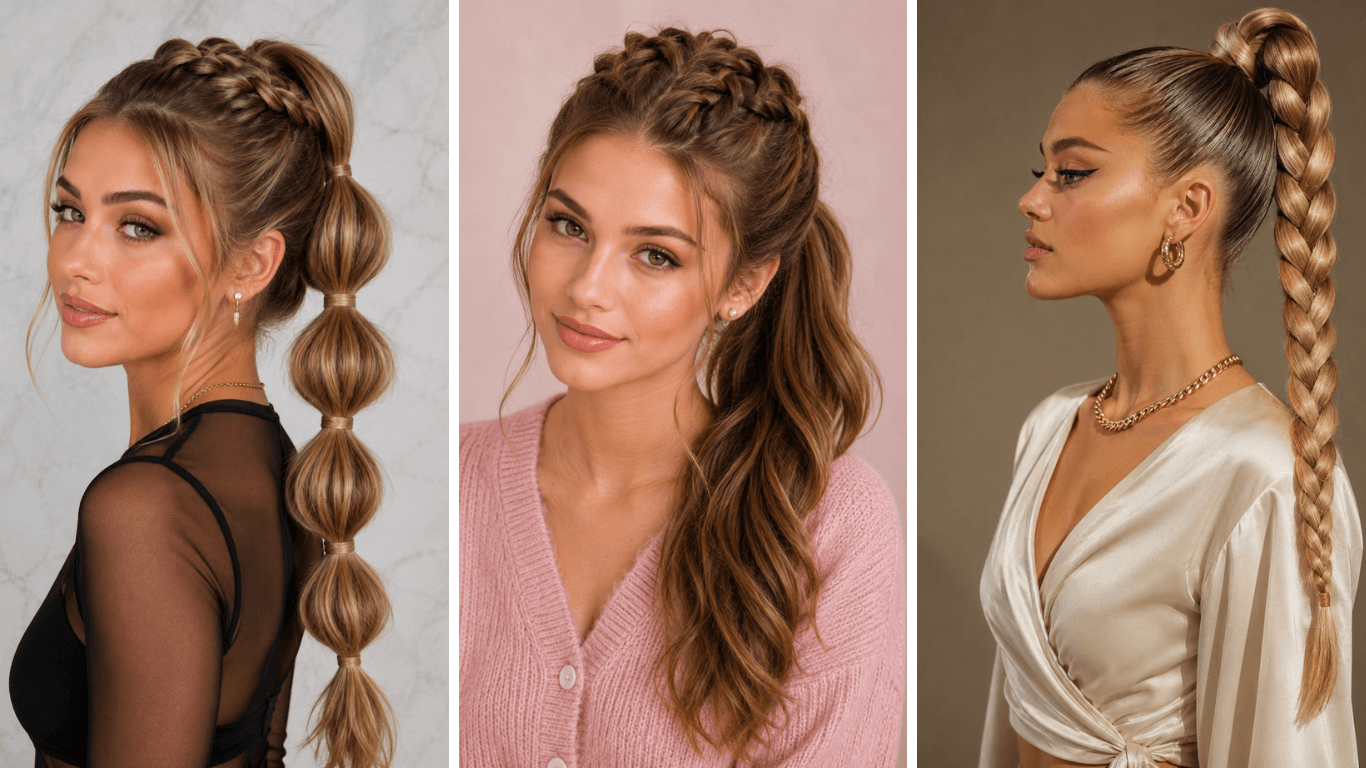
A braided ponytail does double duty. It keeps hair secured and off your face as any ponytail would, but the braid running through it adds texture and detail a plain tail doesn’t have. Whether it’s cornrows feeding into a curly tail or a simple three-strand plait down a sleek high pony, this technique shows up everywhere for a reason.
This list covers 20 ways to wear one, from classic braided-into-ponytail combos to bubble braids, wrapped bases, and styles built specifically to survive a workout. Some take five minutes. Others need a bit more patience. All of them start with the same basic idea: braid it, then tie it back, or tie it back, then braid it.
Find your braided ponytail in 10 seconds
i Tap any category below to find your style
1. Sleek High Braided Ponytail
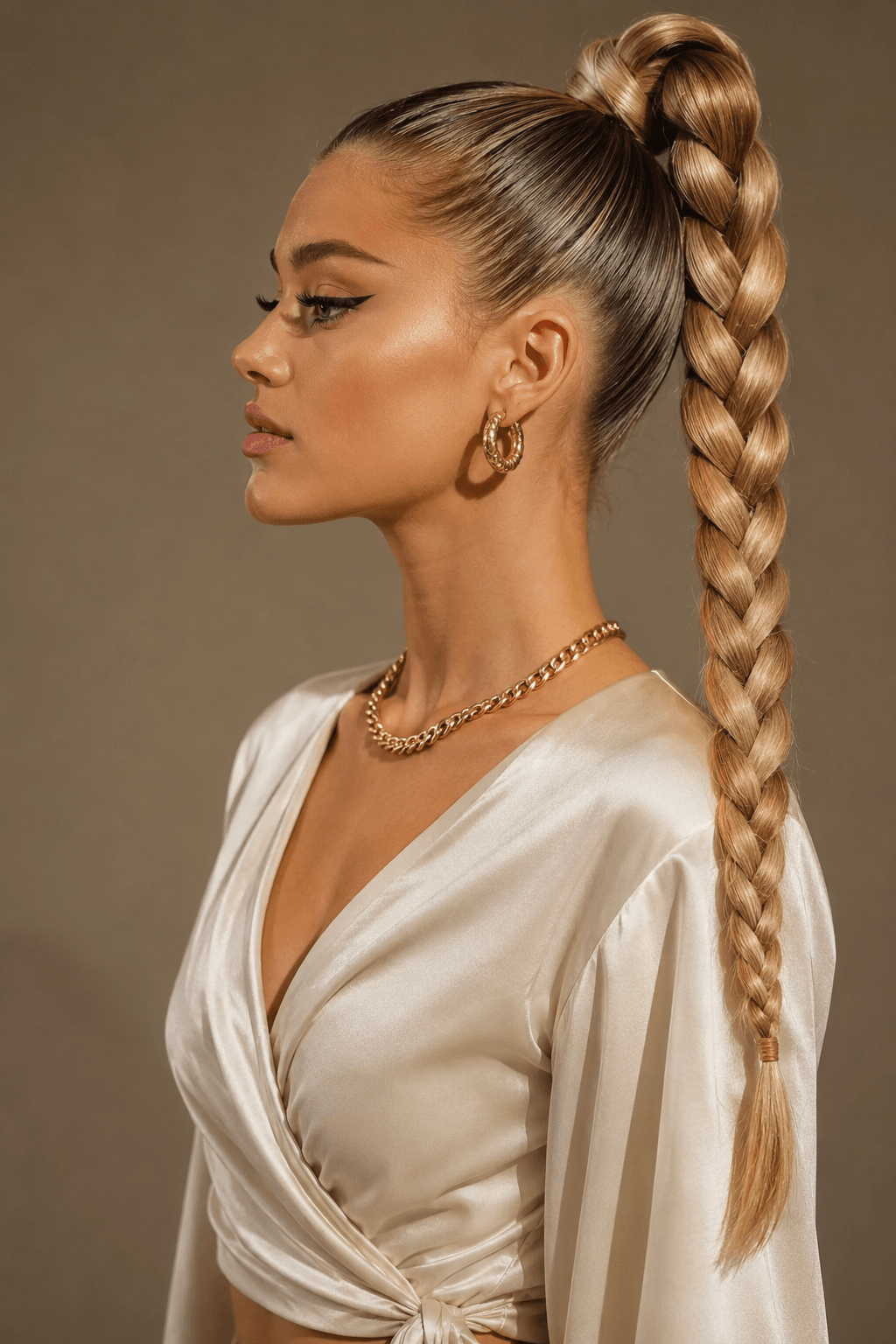
Hair gets pulled into a tight, high ponytail first, then the entire length gets braided in one classic three-strand plait all the way down no loose ends left hanging, the braid runs from base to tip.
Good to Know: Ask for the ponytail itself to be extra sleek and tight before braiding starts. A polished base makes the braid below look more intentional instead of messy.
2. Feed-In Braids into a Curly Ponytail
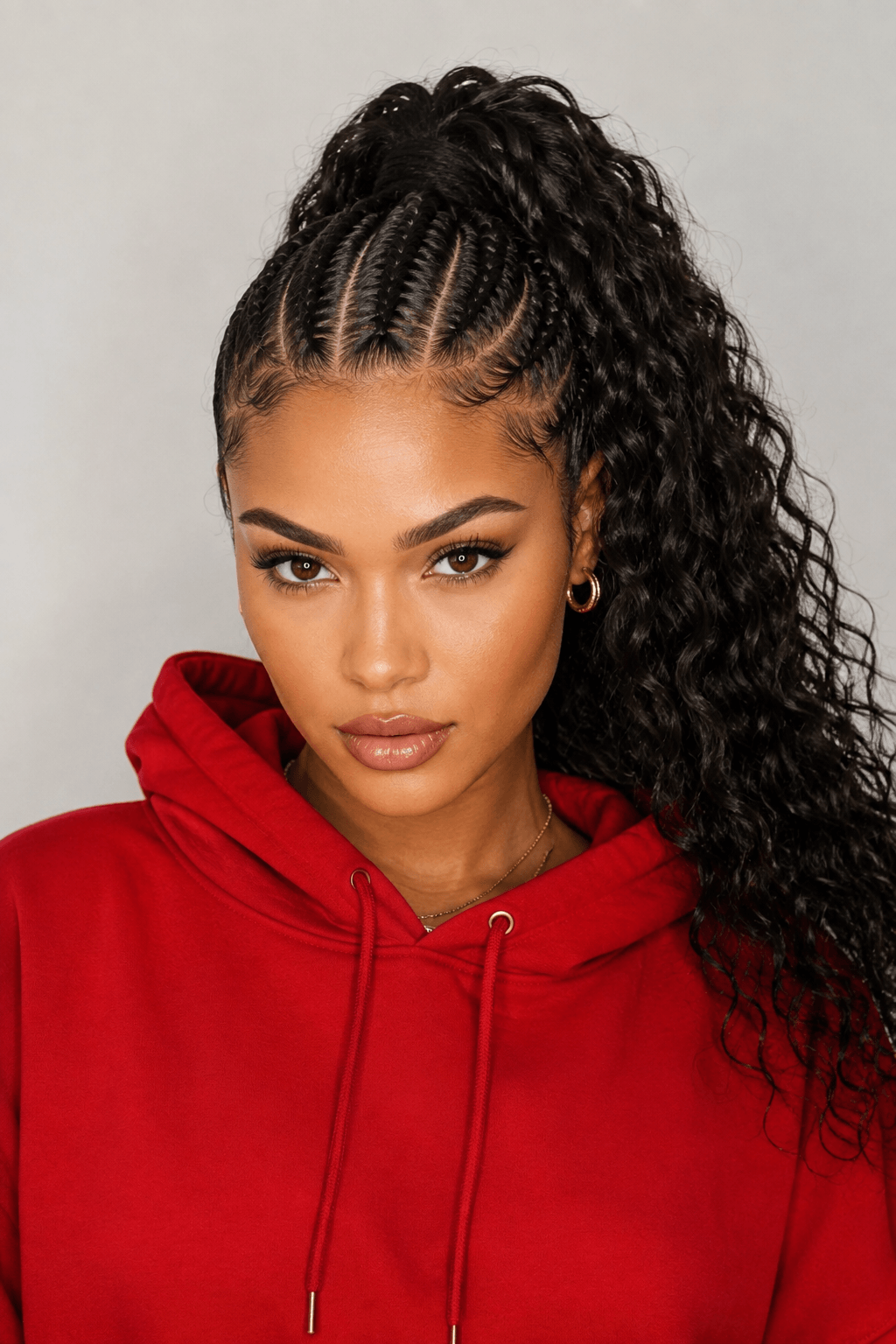
Thin cornrows start at the front hairline and curve back toward the crown, all feeding into one thick ponytail at the top. The braided rows stay tight and structured, while the ponytail itself opens into loose, curly texture instead of staying straight.
Good to Know: Ask your braider to keep the front rows extra clean and close to the scalp. That neat base is what makes the curly ponytail on top look intentional instead of messy.
For more protective braiding styles like this, check out our goddess braids ideas.
3. Fishtail Braid into a Ponytail
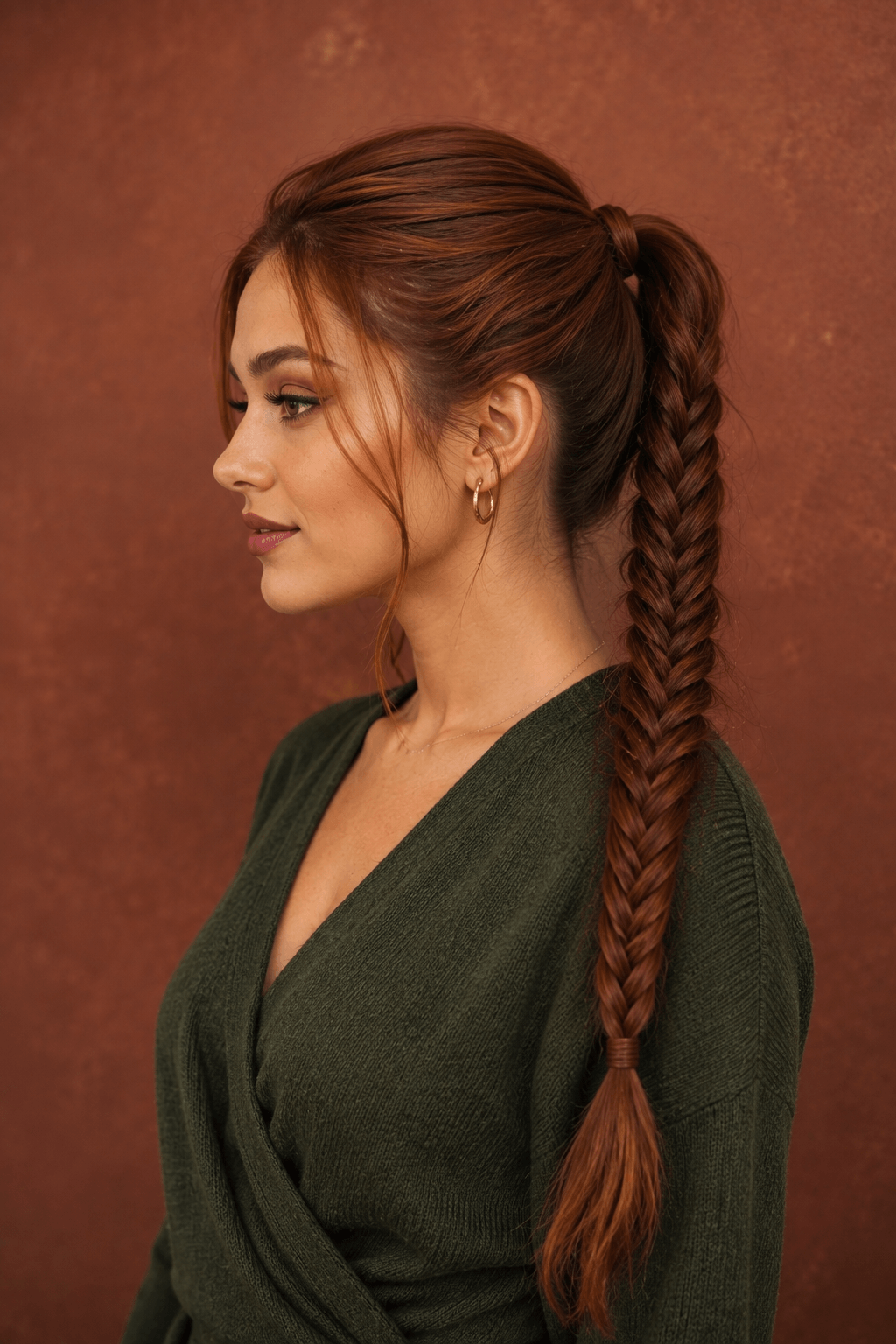
Instead of a classic three-strand plait, the ponytail’s length gets woven in a fishtail pattern, two sections crossing thin pieces back and forth instead of three sections crossing whole. The finer weave gives the tail a more textured, detailed look.
Quick Tip: Pull the fishtail apart slightly once it’s finished. A little tension loosens the weave and makes the texture read more clearly from a distance.
4. Dutch Braided Ponytail
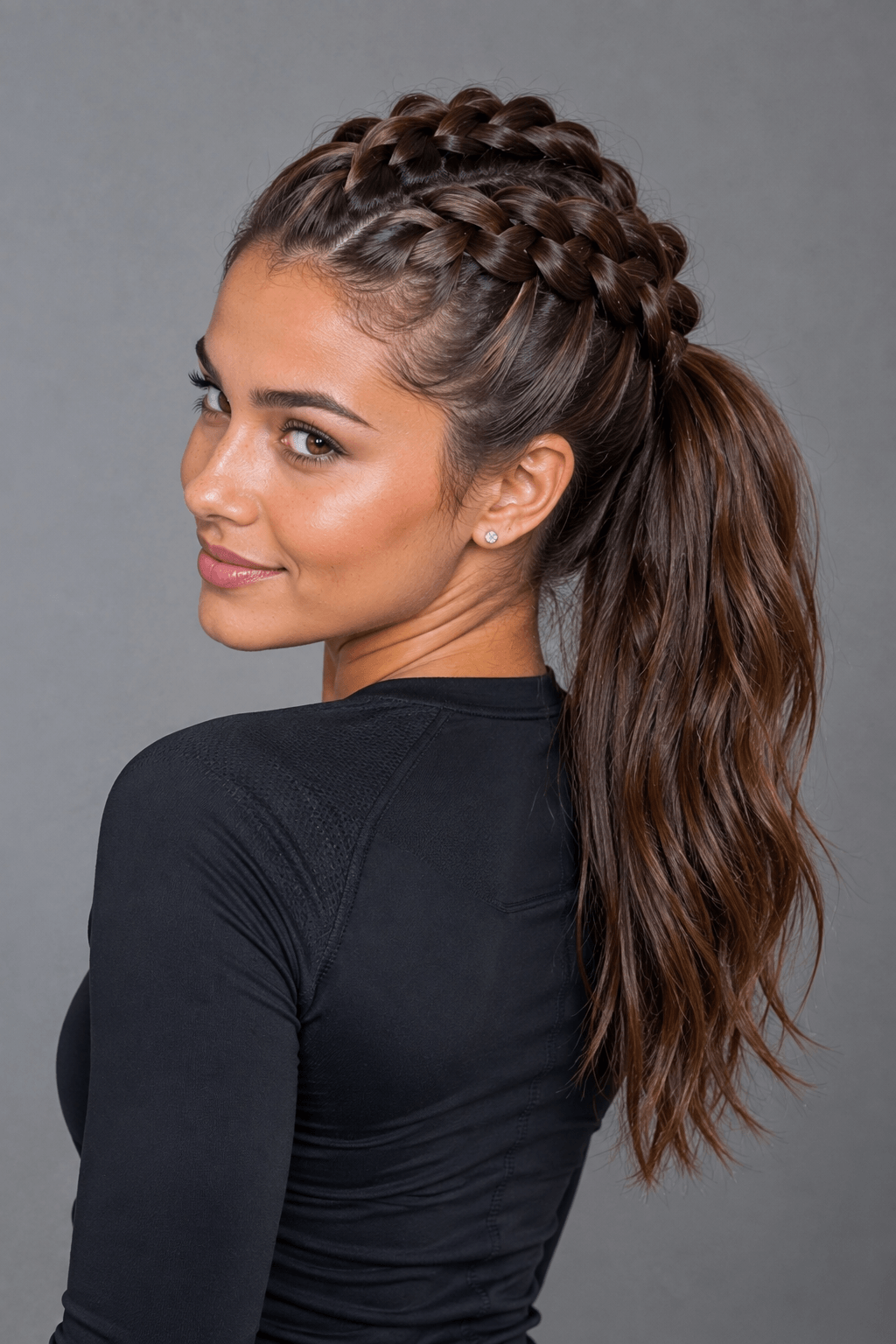
The braid starts right at the crown as a Dutch braid, strands crossing under instead of over, before the rest of the length gets pulled into a ponytail below it. The raised, popped-out texture of the Dutch technique carries all the way down.
Best For: Anyone who wants extra dimension at the root instead of a flat, smooth base leading into the tail.
5. Double Braids into One Ponytail
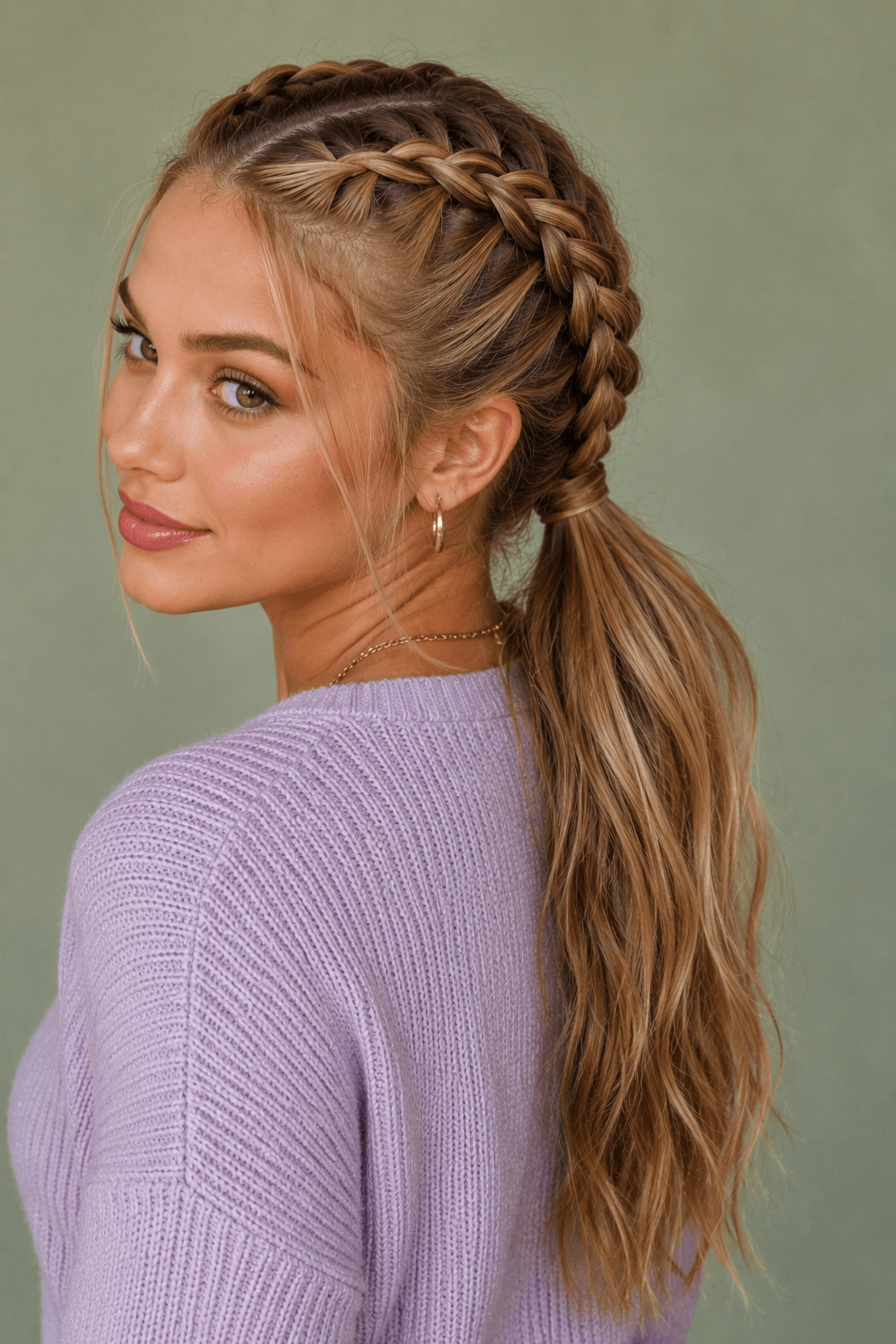
Two separate braids start on either side of the head and meet at the back, merging into a single ponytail instead of staying as two pigtails. The join point sits right where the elastic goes, hiding the transition.
Good to Know: Keep both braids even in tightness and thickness. A mismatch between the two sides shows clearly once they come together.
6. Wrapped Braid Ponytail
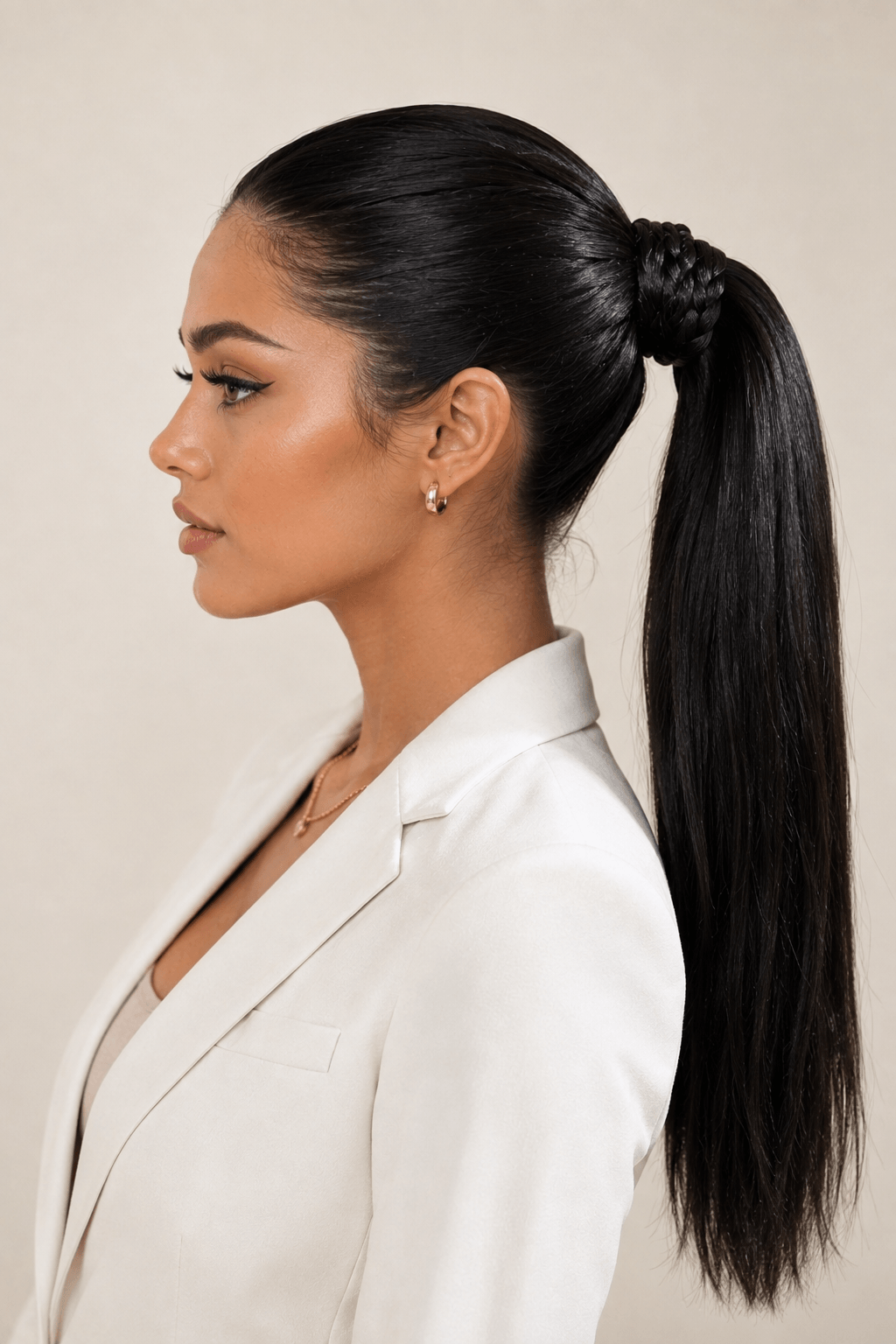
Only the base of the ponytail gets braided, a short section right where the hair ties off, before the rest of the length falls straight and loose. It’s a small detail rather than a full commitment to braiding the whole tail.
Best For: Anyone who wants a hint of texture without braiding the entire length of hair.
7. Rope Twist into a Ponytail
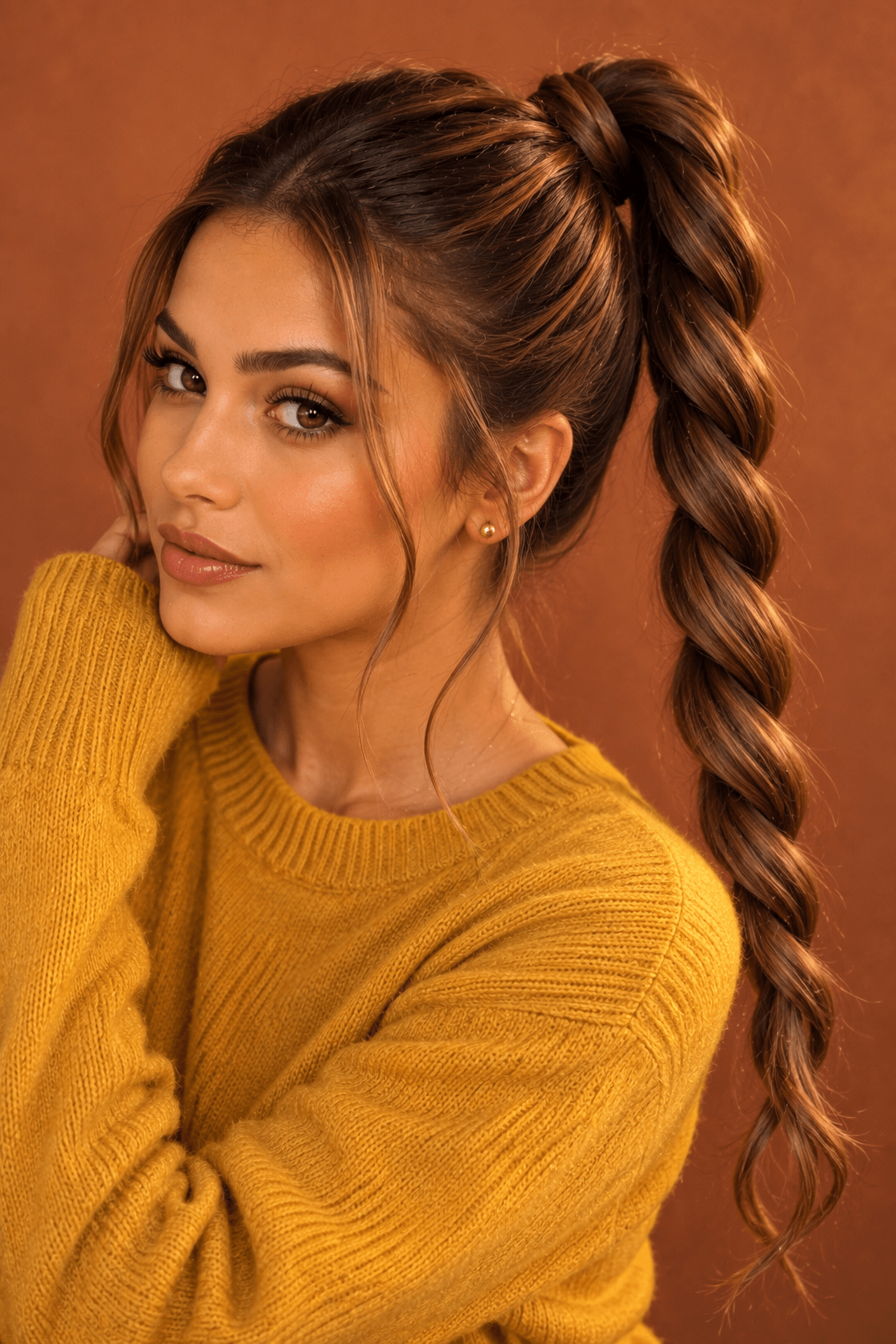
Instead of a woven braid, the ponytail gets twisted, two sections wound around each other in opposite directions to create a spiral rather than a plait. It reads as a braid from a distance but takes half the time to do.
Good to Know: Rope twists tend to loosen faster than woven braids. A bit of texturizing spray on damp hair before twisting helps the shape hold longer.
8. French Braided Ponytail
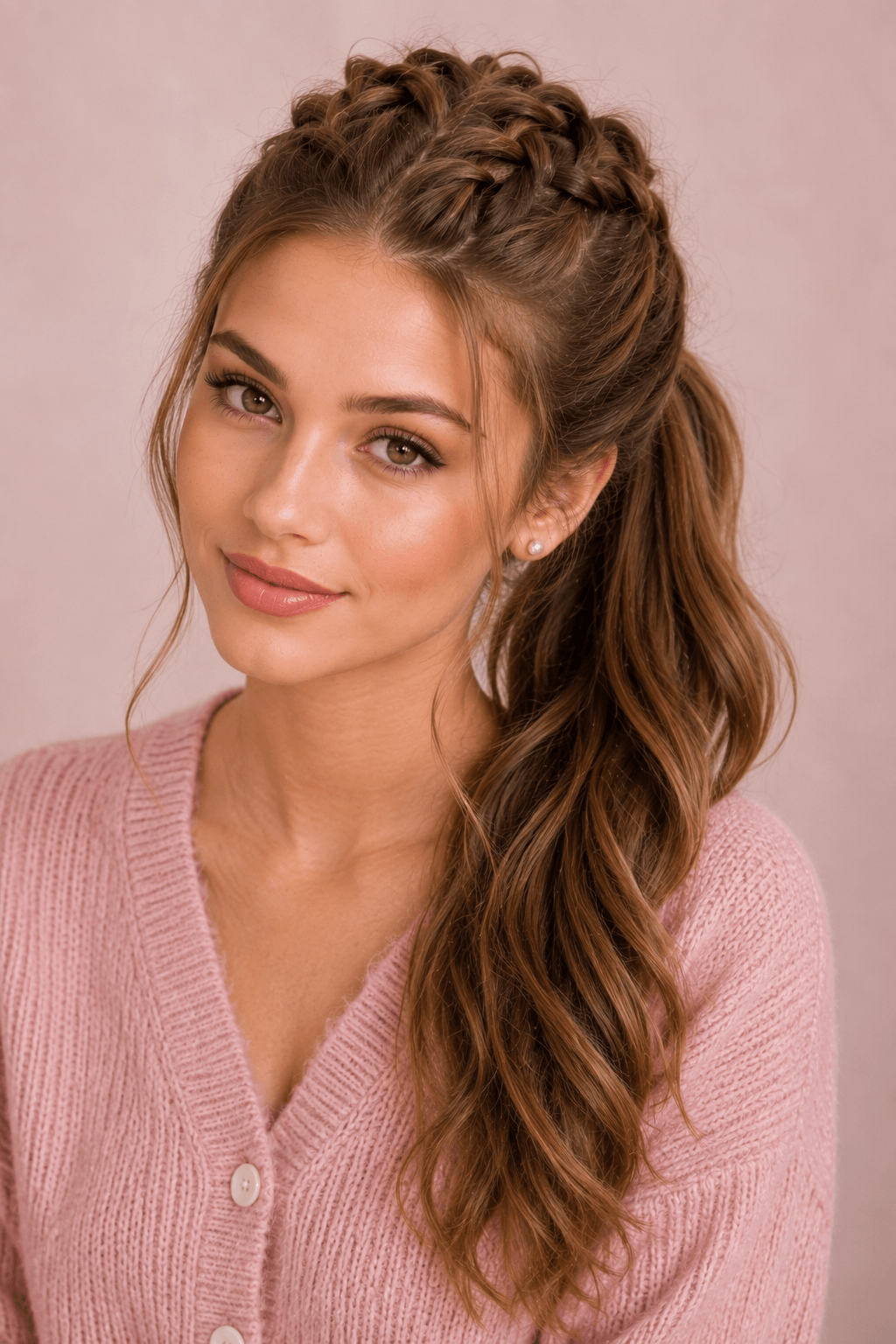
The braid starts at the crown as a classic French plait, hair added in from both sides as it moves down, before the rest of the length continues as a ponytail once the braided section ends partway down.
Best For: A style that transitions from structured up top to loose and natural below.
9. Braided Bubble Ponytail
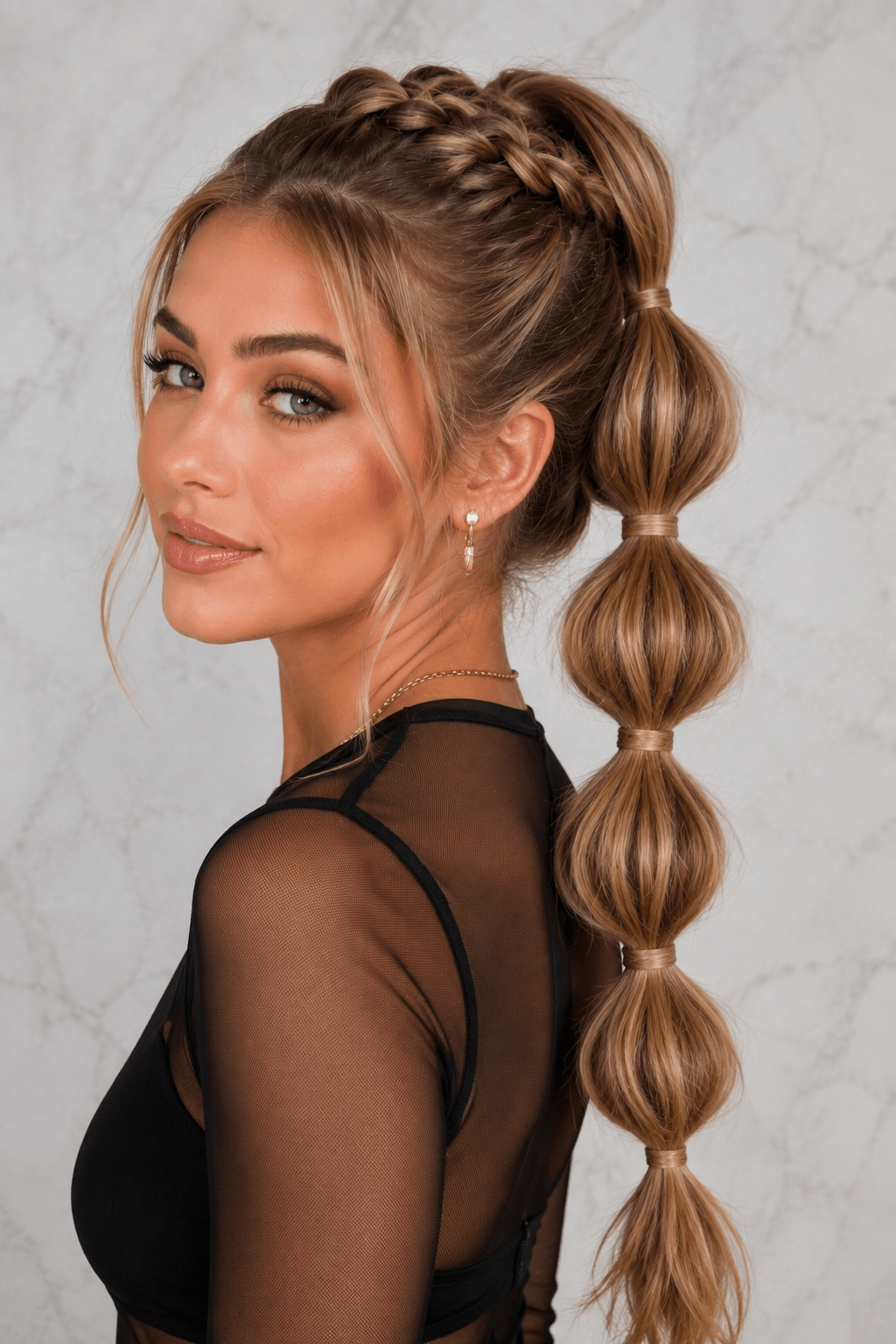
A three-strand braid runs down the ponytail, but small clear elastics section it off every couple of inches, then each section gets pulled slightly to puff out around the braid underneath. Part braid, part bubble, all in one tail.
Good to Know: Don’t pull the sections too aggressively. Gentle tugging keeps the braid visible underneath instead of hiding it completely.
10. Cornrows into a Sleek Low Braided Ponytail
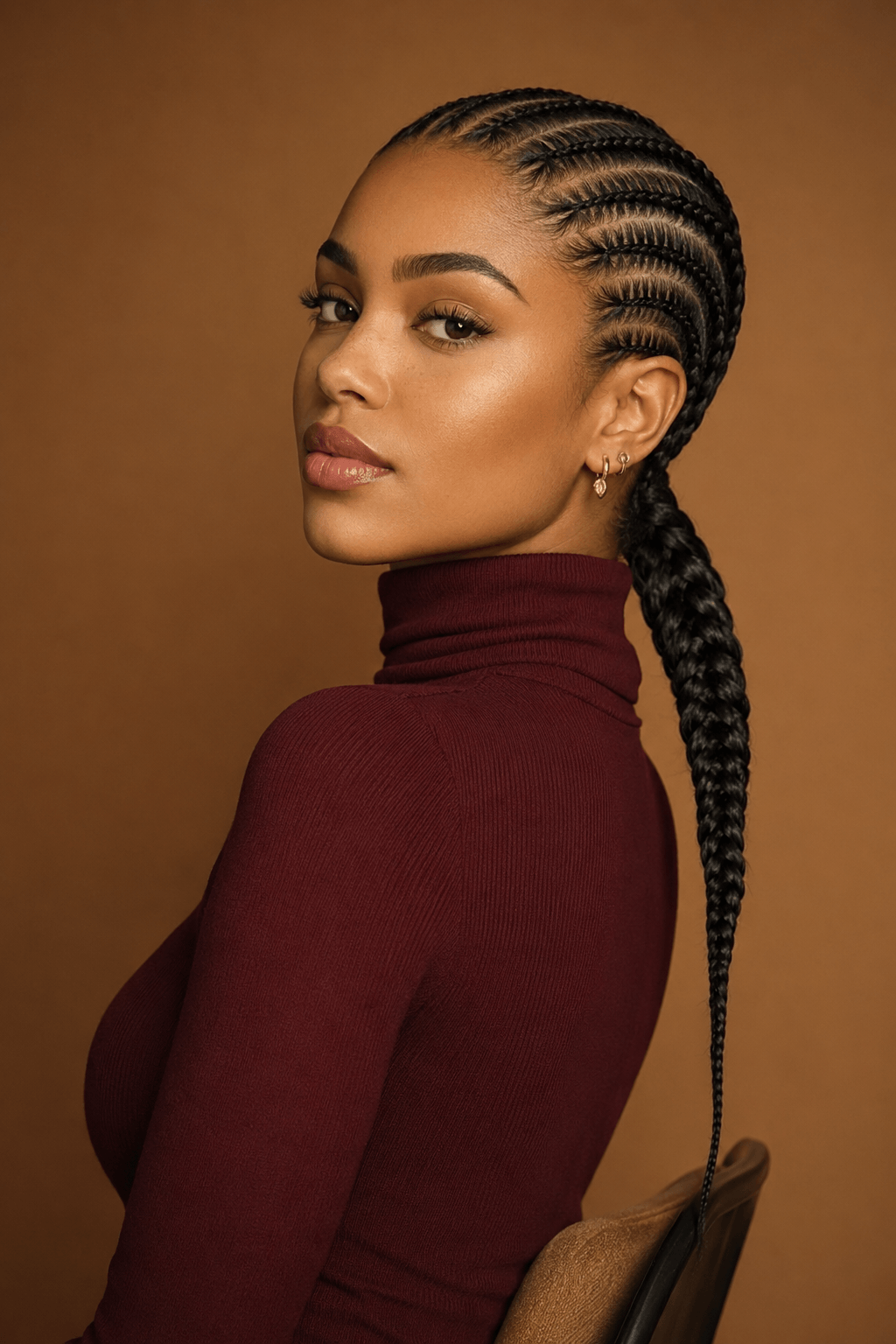
Straight-back cornrows run from the hairline to the crown, then gather into a low ponytail at the nape instead of a high one. The braided length continues down from there in one thick plait.
Good to Know: A low placement pulls less at the hairline than a high one, which makes this a gentler option for sensitive scalps.
11. Half-Up Braided Ponytail
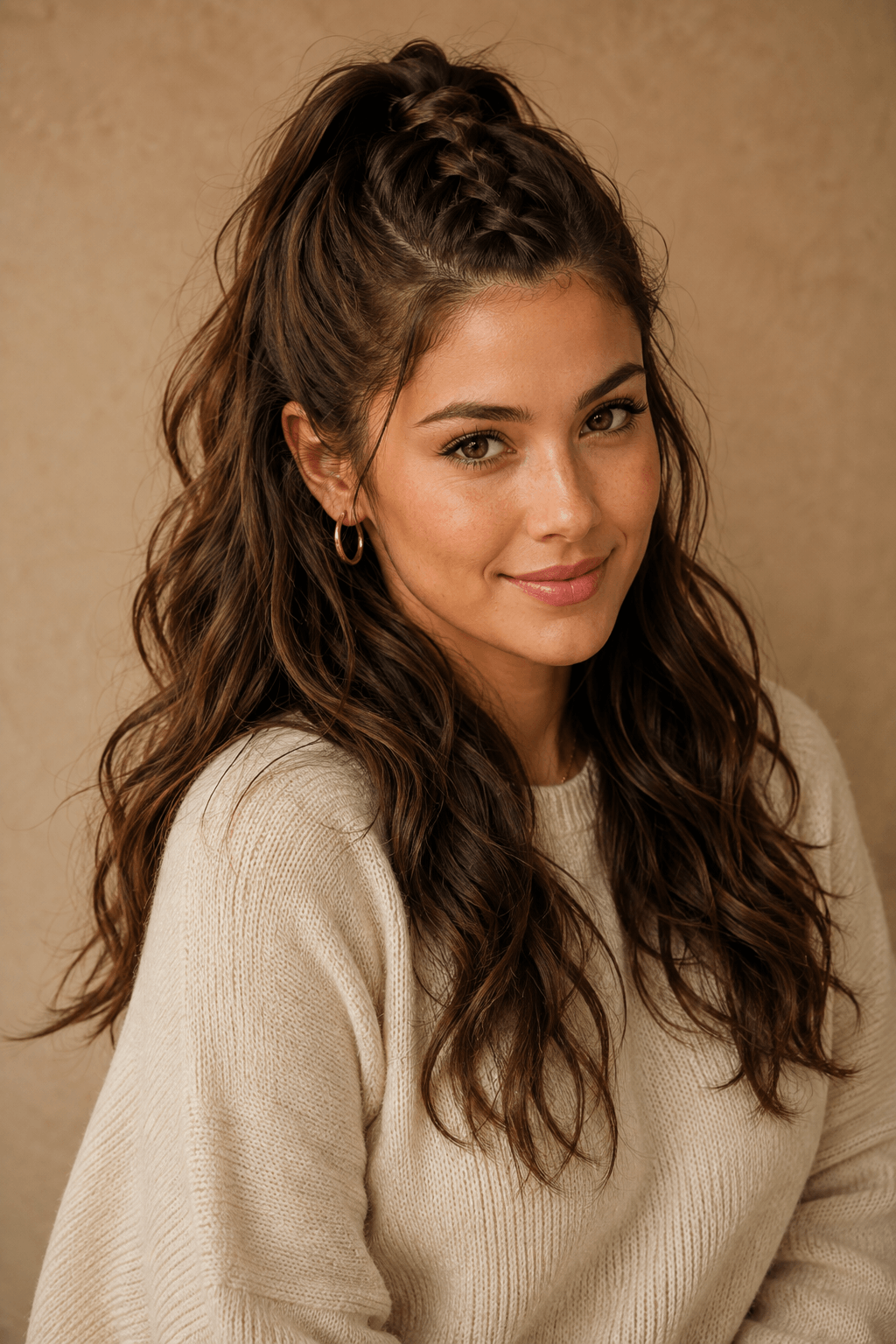
Only the top section of hair gets braided and pulled into a small ponytail, while the rest stays down and loose underneath. It’s a middle ground between a full braided style and wearing hair completely down.
Quick Tip: Keep the braided section loose rather than tight. A relaxed braid blends more naturally into the loose hair falling below it.
12. Braided Ponytail with Face-Framing Pieces
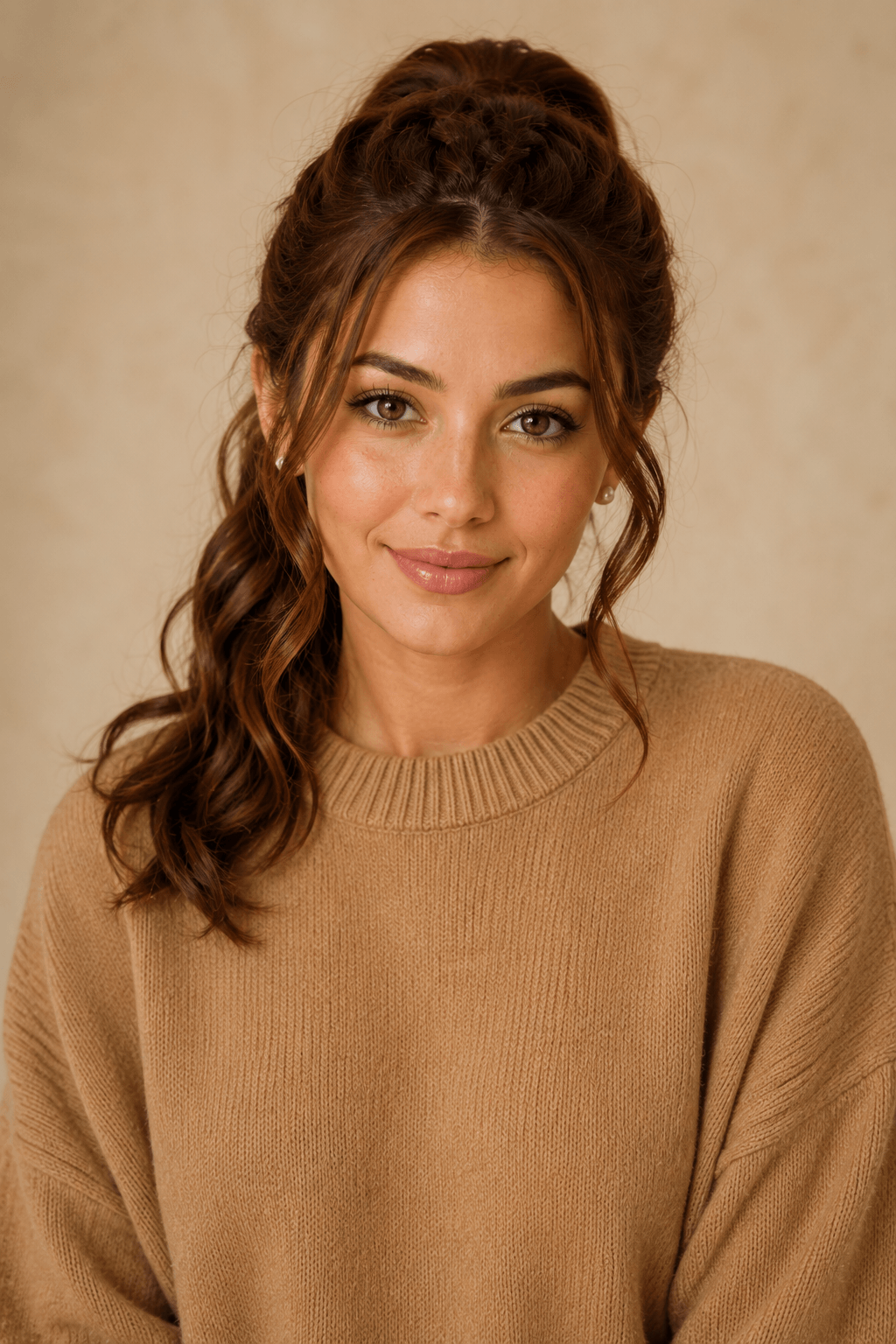
The main ponytail gets braided as usual, but a couple of small sections near the temples are left out instead of pulled back with everything else. They soften the hairline without changing the rest of the braided shape.
Best For: Anyone who wants the structure of a braided ponytail without a completely severe, pulled-back front.
13. Braided Ponytail with Beads
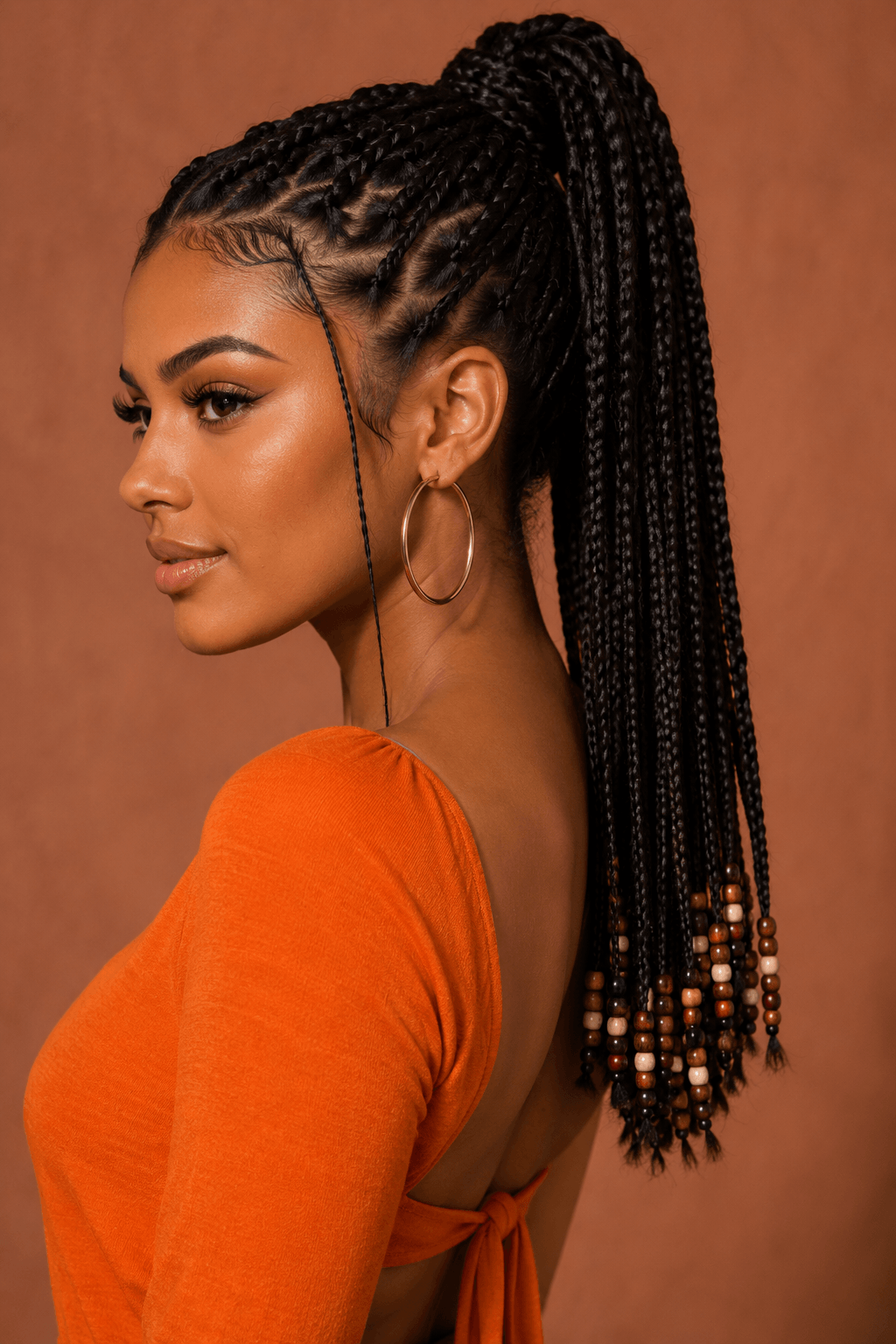
The braid runs the full length of the ponytail, and small beads slide onto the very ends once the braiding is done. They add movement and a bit of sound with every turn of the head.
Good to Know: Lighter beads work better than heavy ones at the ends of a braid this long. Too much weight can pull the plait loose faster than it should.
14. Braided Ponytail Updo
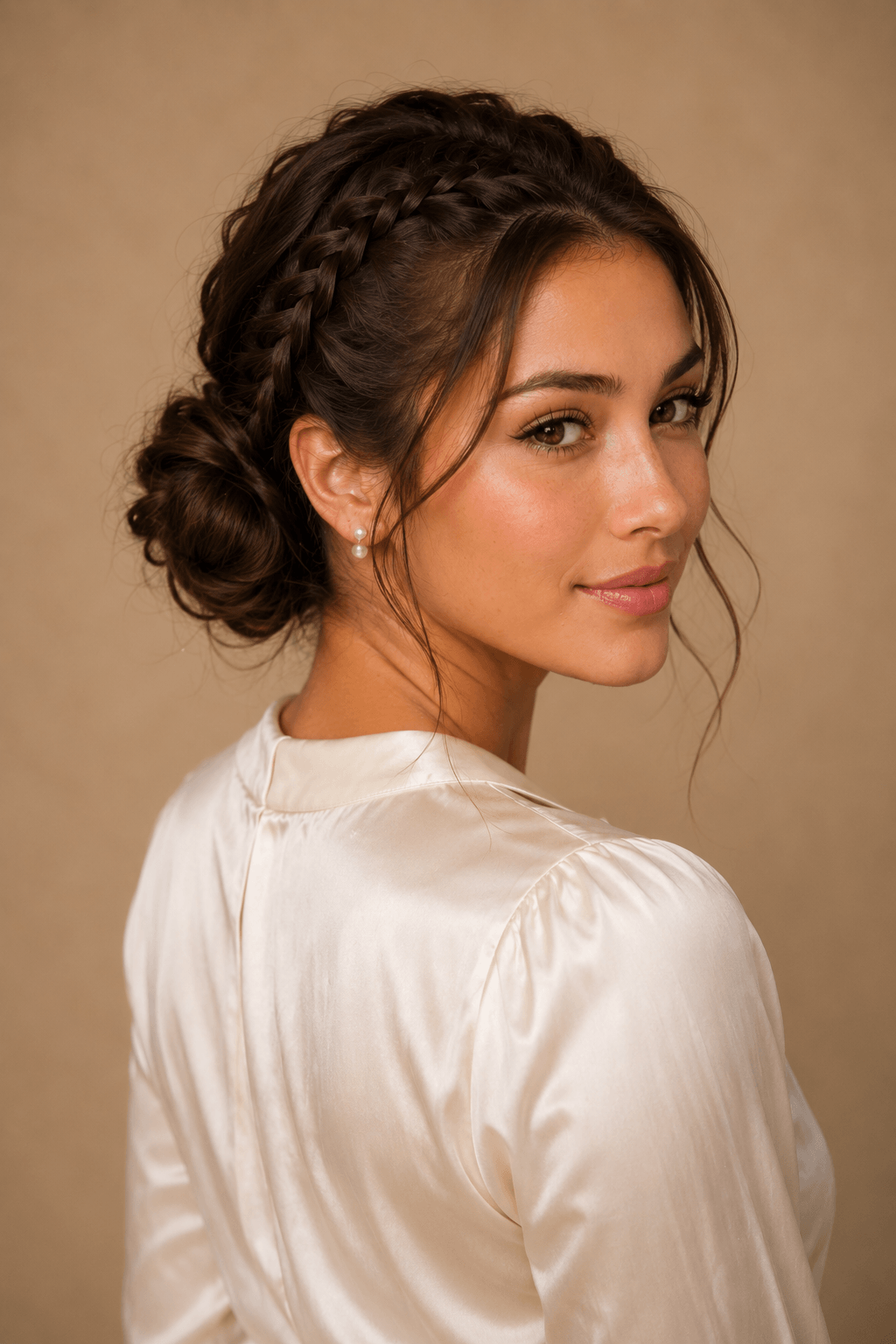
Instead of letting the braided ponytail hang, the length gets wrapped around its own base once the braid is finished, turning it into a low, textured bun instead of a tail.
Best For: A more formal finish without switching to a completely different style.
15. Two-Strand Braided Ponytail
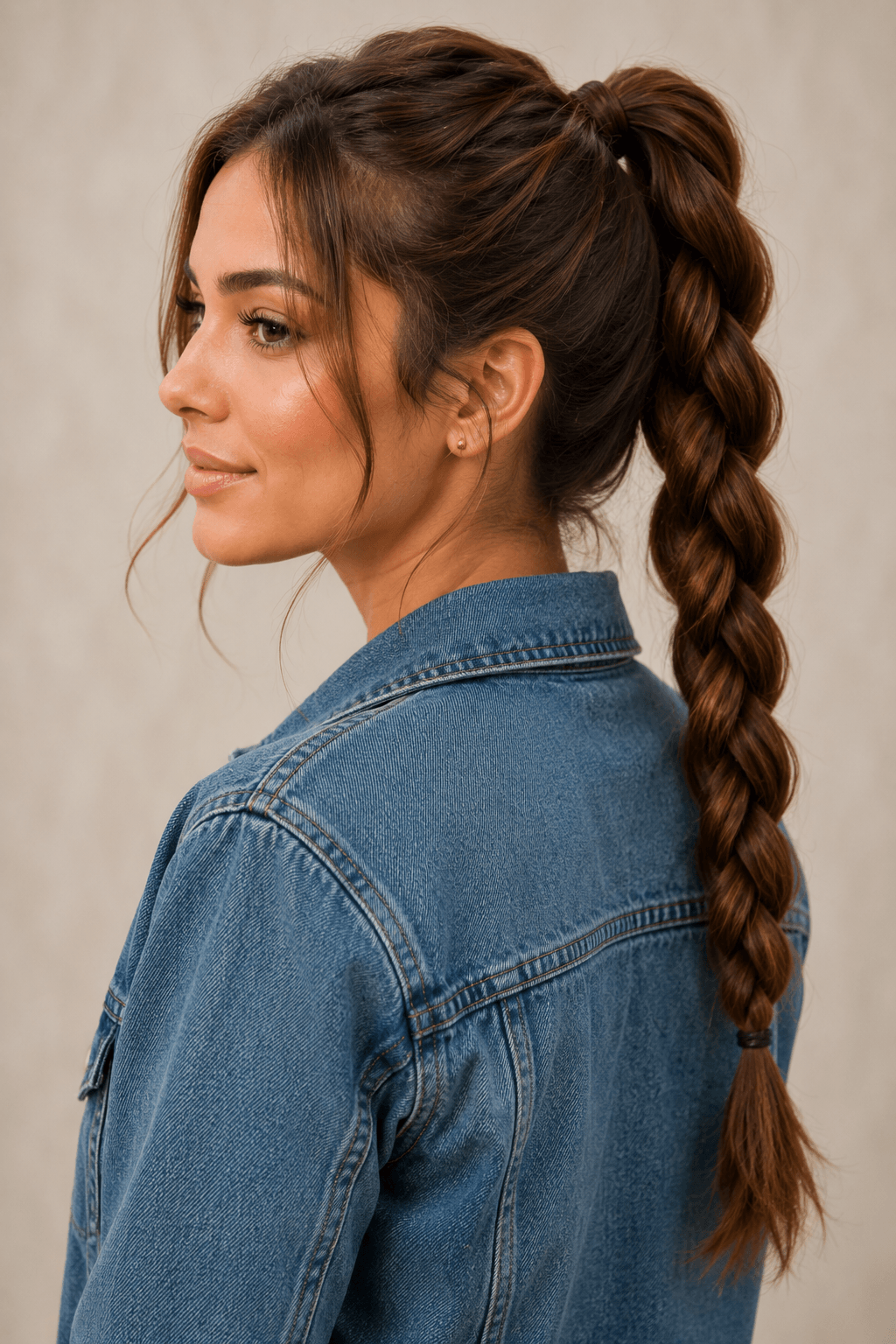
Rather than the usual three sections, this braid uses just two, crossed and layered over each other repeatedly down the length. It creates a chunkier, more casual texture than a standard plait.
Good to Know: Two-strand braids come apart more easily than three-strand ones. A small hair tie at the very end helps keep it from unravelling.
16. Braided Ponytail with a Deep Side Part
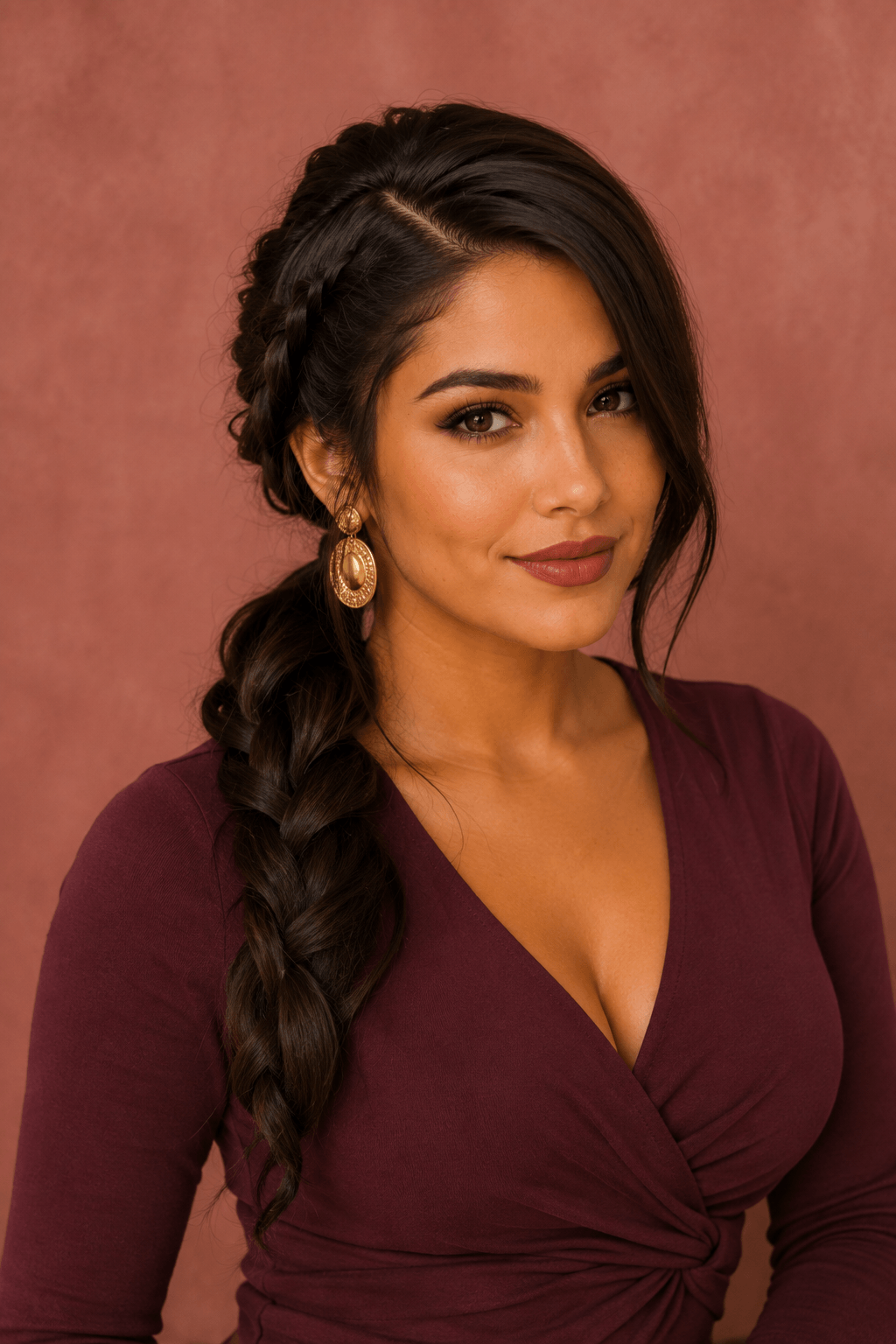
The part sits far to one side instead of centered, so the braid starts from an angle rather than straight back. It changes the whole shape of the front before the braiding even begins.
Best For: Rounder face shapes, since the deep angle adds length to the overall silhouette.
17. Chunky Braided Ponytail
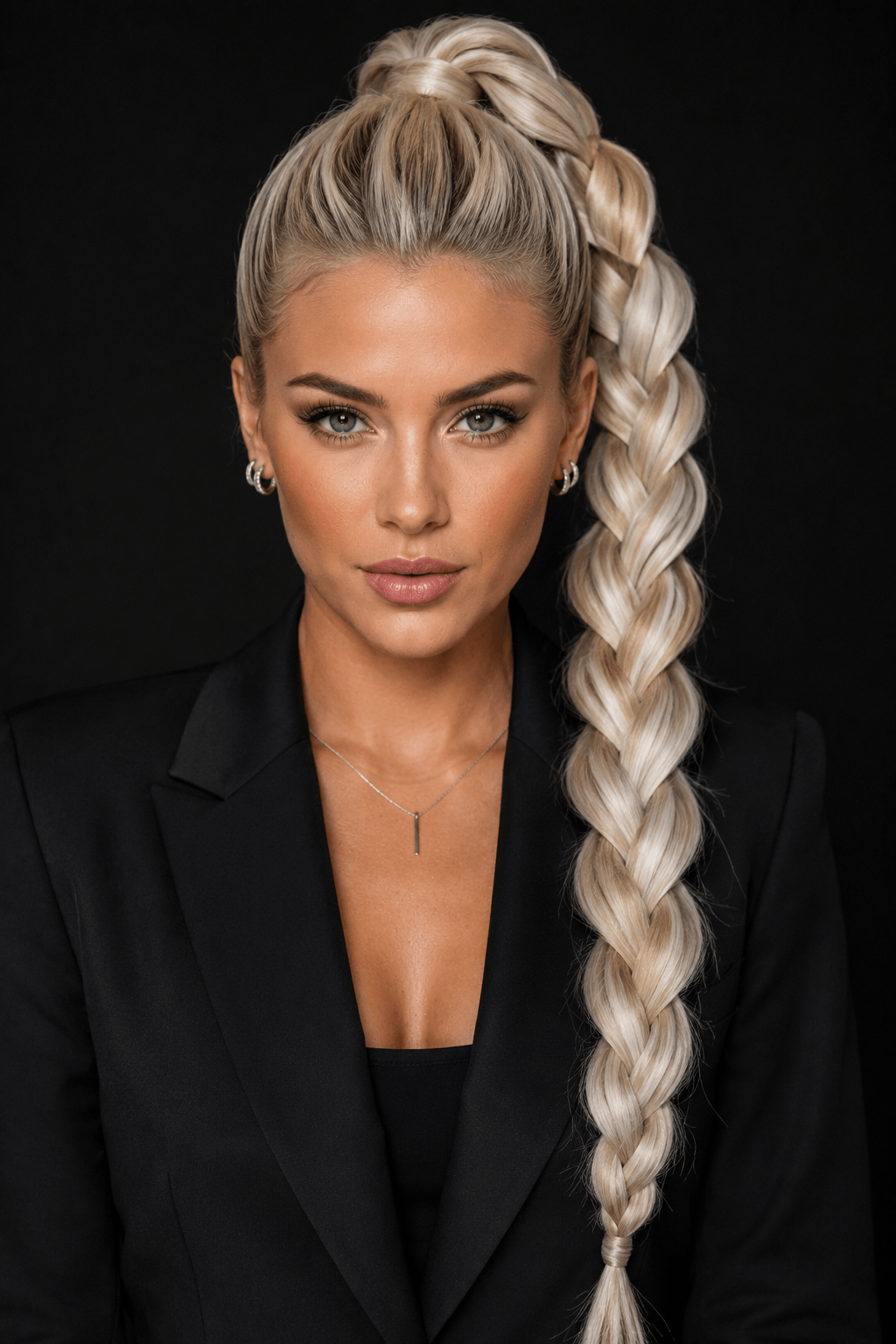
Instead of a fine, tight plait, this version uses thick sections for a bigger, bolder braid. Fewer crosses overall, but each one is wide enough to stand out clearly.
Good to Know: Chunky braids hold their shape with less product than fine ones. A light hold spray is usually enough to keep it looking neat.
18. Braided Ponytail for Short Hair
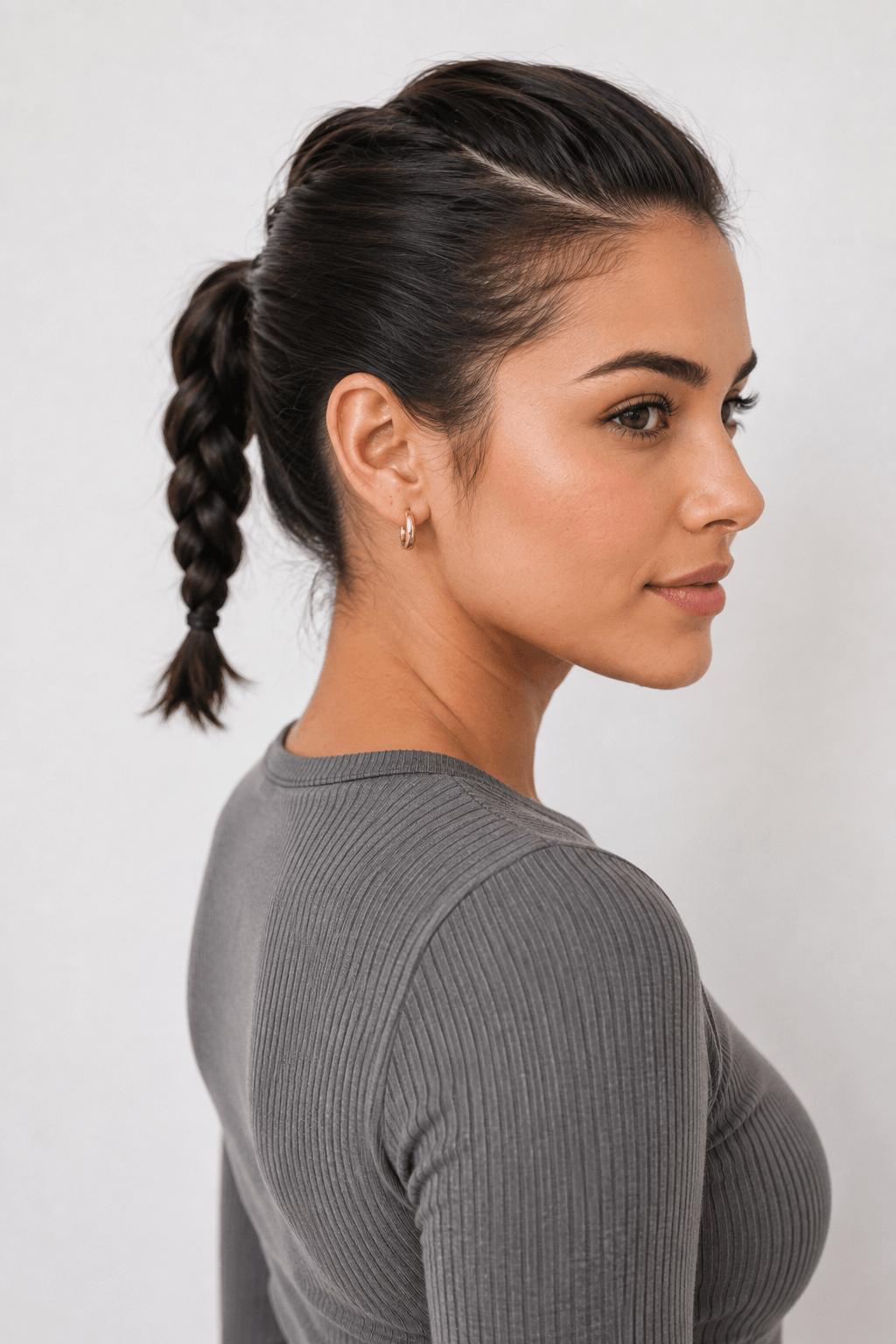
With less length to work with, the braid stays shorter too, sometimes ending just past the elastic instead of running the full length. Clip-in extensions can add length if a longer braid is the goal.
Quick Tip: Ask for a tighter braid pattern on shorter hair. Looser weaves tend to fall apart faster when there’s less length holding the shape together.
19. Gym-Ready Braided Ponytail
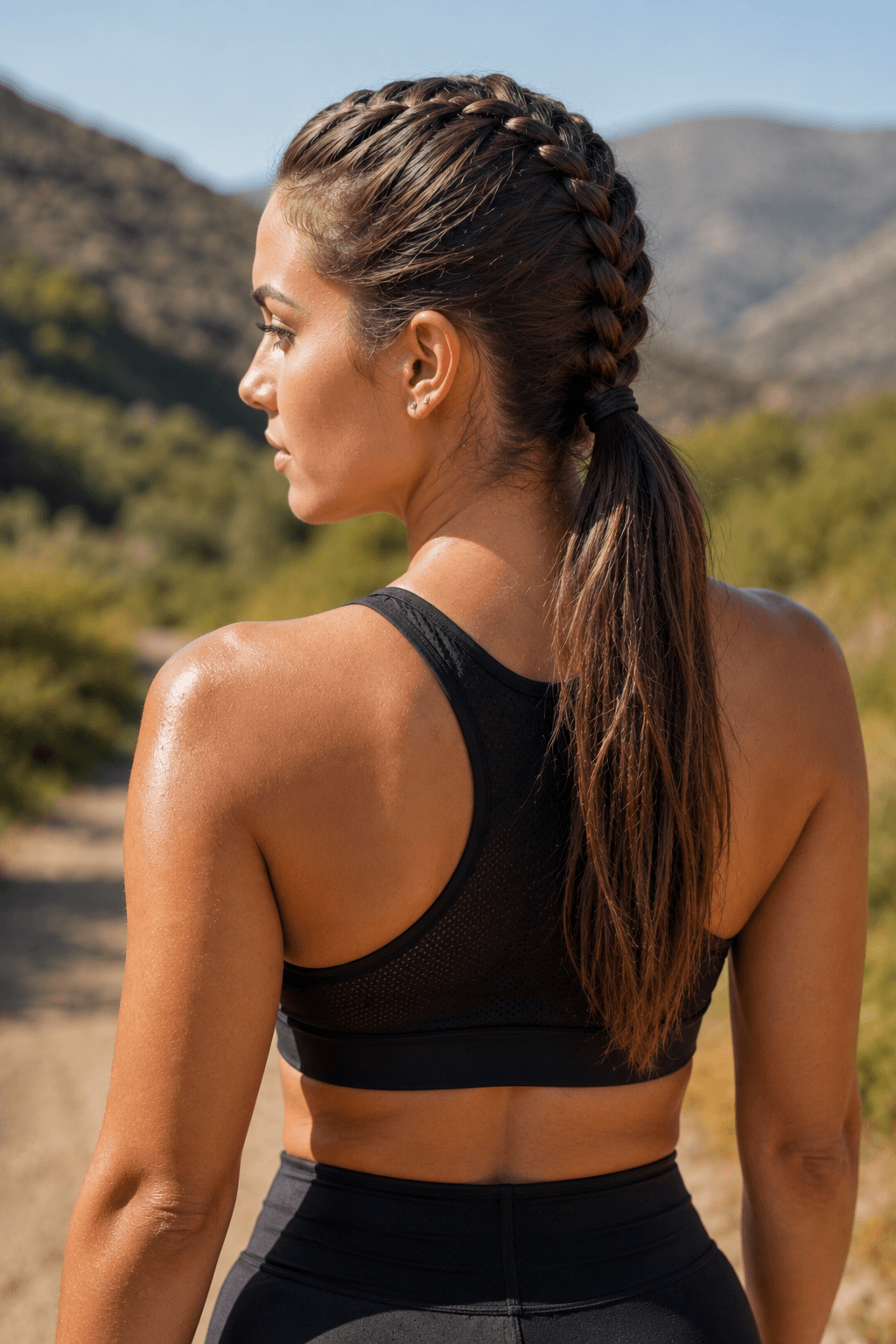
A simple, tight braid runs from a high ponytail down the full length, built specifically to survive a workout without loosening halfway through no loose pieces, no face-framing details, just a secure braid that stays put.
Best For: Runs, spin class, or anywhere sweat and movement would otherwise wreck a looser style within minutes.
20. Braided Ponytail with a Wrapped Elastic
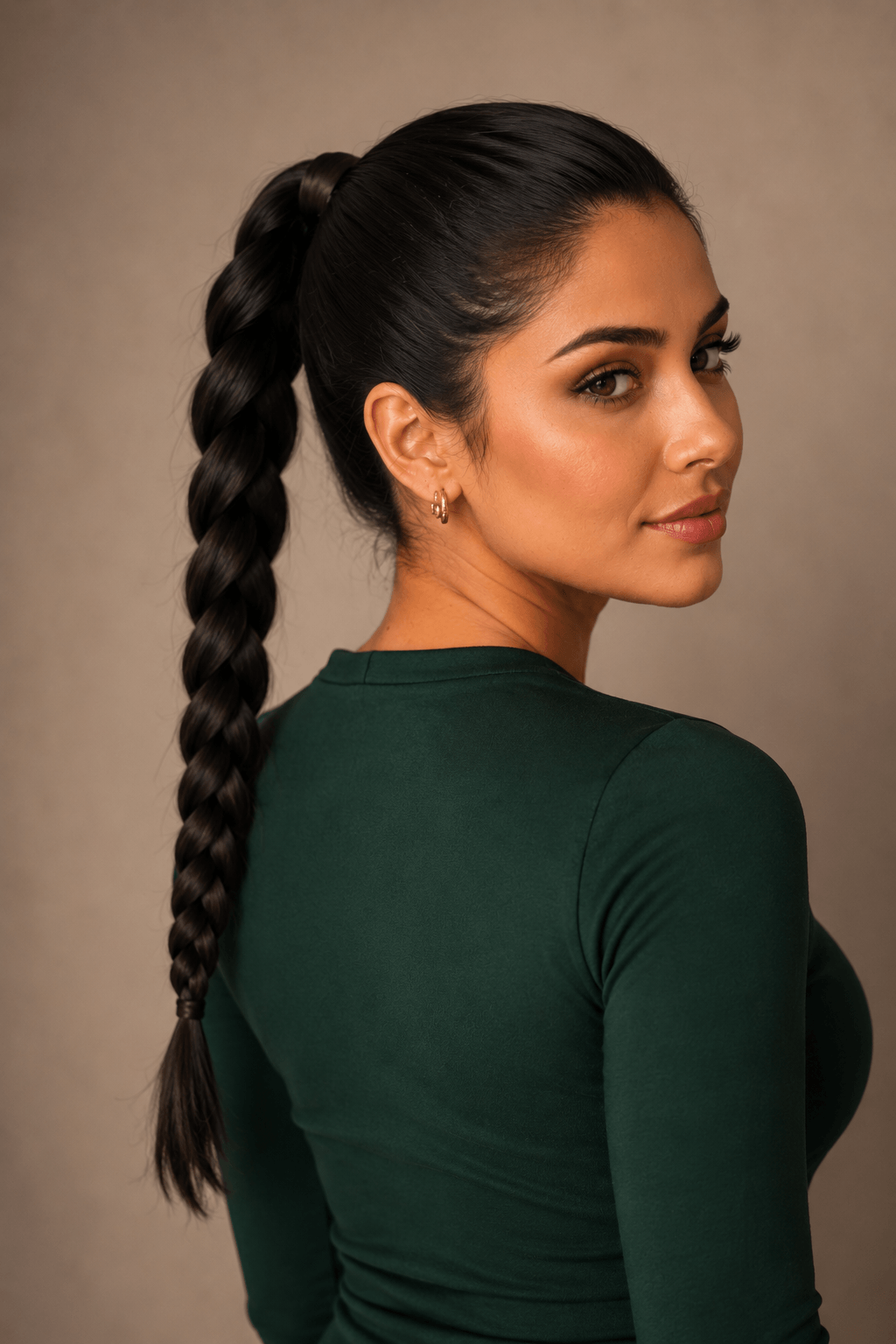
The braid runs the full length as usual, but a small section wraps around the base to hide the elastic completely, instead of leaving the tie visible where the braid starts.
Good to Know: This detail works with nearly every braided ponytail style on this list. It’s a small step that makes any of them look more finished.
Frequently Asked Questions
Conclusion
Twenty styles, but they all lean on the same basic move: tie hair back, then braid it, or braid first, then tie it back. The difference comes down to which braid technique you use and where you place the ponytail itself.
Start with a simple three-strand braid if this is new to you, then branch out toward fishtail, Dutch, or a chunkier weave once the basics feel easy. A little practice and most of these become quick enough for a regular morning.